New York Fashion Week 2026 New York Fashion Week 2026

HIV Unwrapped Takes New York Fashion Week to a Whole New Level

Bigger. Bolder. More spectacular than ever.

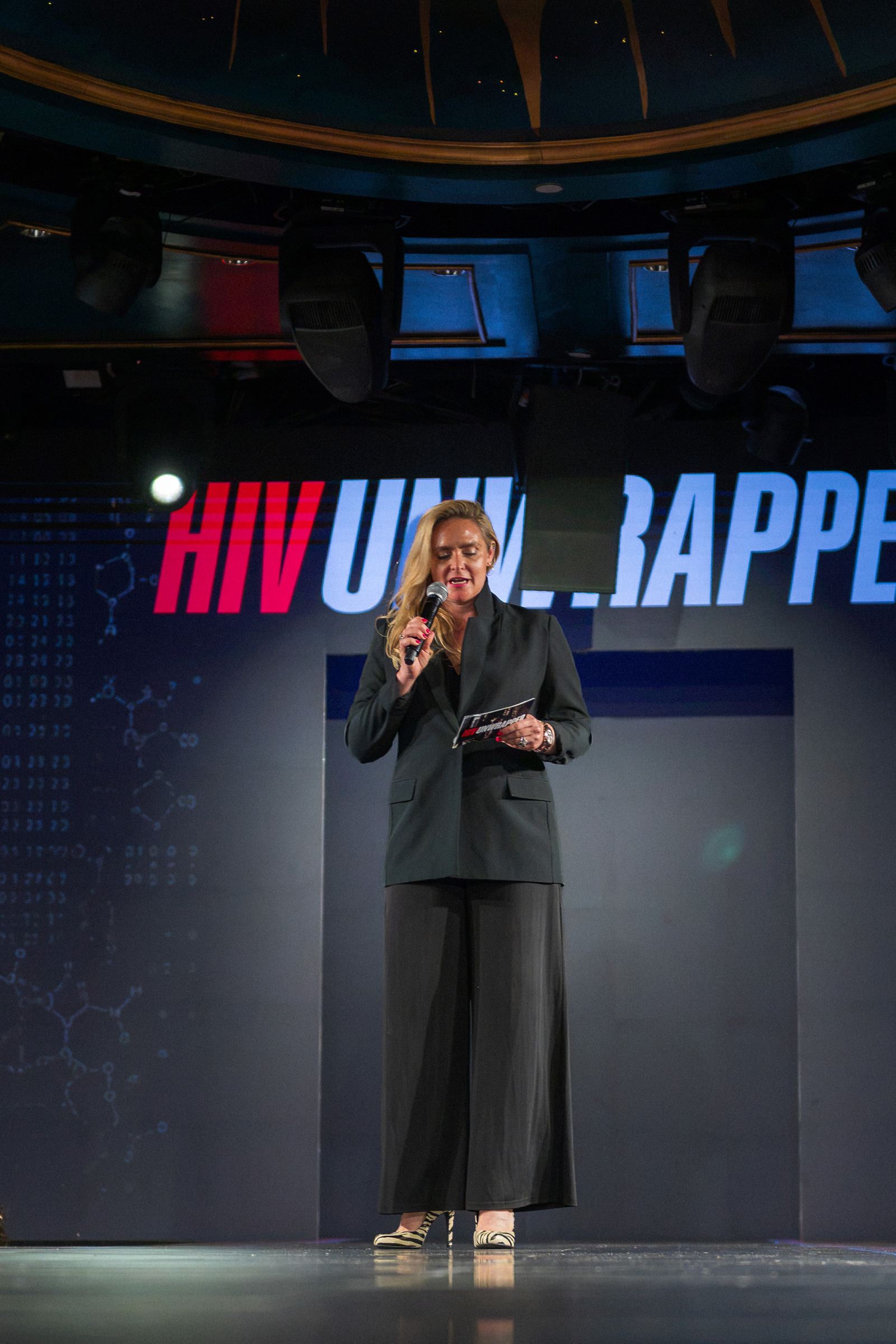
HIV Unwrapped returned to New York Fashion Week in 2026, transforming Manhattan’s iconic Sony Hall into a spectacular fusion of high fashion, groundbreaking HIV science and powerful storytelling. With an elevated production, exciting new talent and leading voices in HIV, this year’s show raised the bar once again.

Presented by ASHM and Plus Life Media, in partnership with Gilead Sciences, the event brought together emerging fashion designers from Parsons School of Design with leading HIV researchers, clinicians and advocates to reimagine the traditional white lab coat as wearable art. Under the creative direction of the returning John de los Santos, each original design brought HIV science and lived experiences to the runway, exploring breakthroughs in prevention and treatment alongside identity, resilience and the ongoing fight against stigma.

Building on successful editions around the world, the 2026 show marked another milestone in HIV Unwrapped’s international growth. The continued global partnership with Gilead Sciences has helped expand the initiative’s creative ambition, reach and impact, bringing new audiences into conversations about HIV that too often remain confined to medical and scientific settings.

More than a fashion show, HIV Unwrapped uses the power of creativity and popular culture to make HIV science accessible, challenge outdated perceptions and put the people behind the progress firmly in the spotlight.

Because HIV isn’t a look you can pull off the rack. And stigma? There’s nothing fashionable about that.


Project promotional image generated with AI
All images of the garments on this page are TEMPORARY ONLY. The final photos of the garments will be available in September. All biographies reflect the time of the exhibition, please follow their social media links to see their latest work.

Ahmad Farroukh + Keri Althoff

Ahmad Farroukh

Ahmad is a Lebanese-Canadian fashion designer and illustrator currently in his final year of study in New York at Parsons School of Design. Hyper-feminine in aesthetic, his work adapts the imagery of classic fairy tale archetypes into silhouettes for the modern woman. Draped in ethereal layers of custom-printed chiffons and contrasted with structured twills and organdies, the damsels and heroines in his designs dance delicately between dreamlike states of melancholy, horror and romance. Curated from his childhood daydreams and obsessions, his garments are candy-hued chimeras, enabling their wearers to indulge in their feminine side without fear of judgment or social repercussions. Adorning each of his pieces are rune-like illustrations, which crown his garments with a figurative protective spell, prayer or manifestation, and craft a visual portal into his fantasy world.

Keri Althoff

Keri Althoff is a Professor of Epidemiology at the Johns Hopkins Bloomberg School of Public Health focused on healthful ageing with HIV. She co-led the Lancet HIV Commission on Ageing and HIV: A Global Perspective (2026) which called for a paradigm shift in care for those ageing with HIV including: (a) initiating the focus on healthful ageing at the time of ART initiation, (b) supplement chronologic age with physiologic age, (c) going beyond the walls of clinical care with linkages from the clinic setting to community resources that meet the needs of people aging with HIV, and (d) identify and recommend culturally-appropriate digital tools to measure vision, hearing, frailty and daily functioning. She leads the largest collaboration of longitudinal studies of people with HIV in the US and Canada, following more than 200,000 people with HIV. Dr. Althoff has >200 peer-reviewed publications, teaches courses onsite and through online-only platforms, and has mentored >40 trainees.

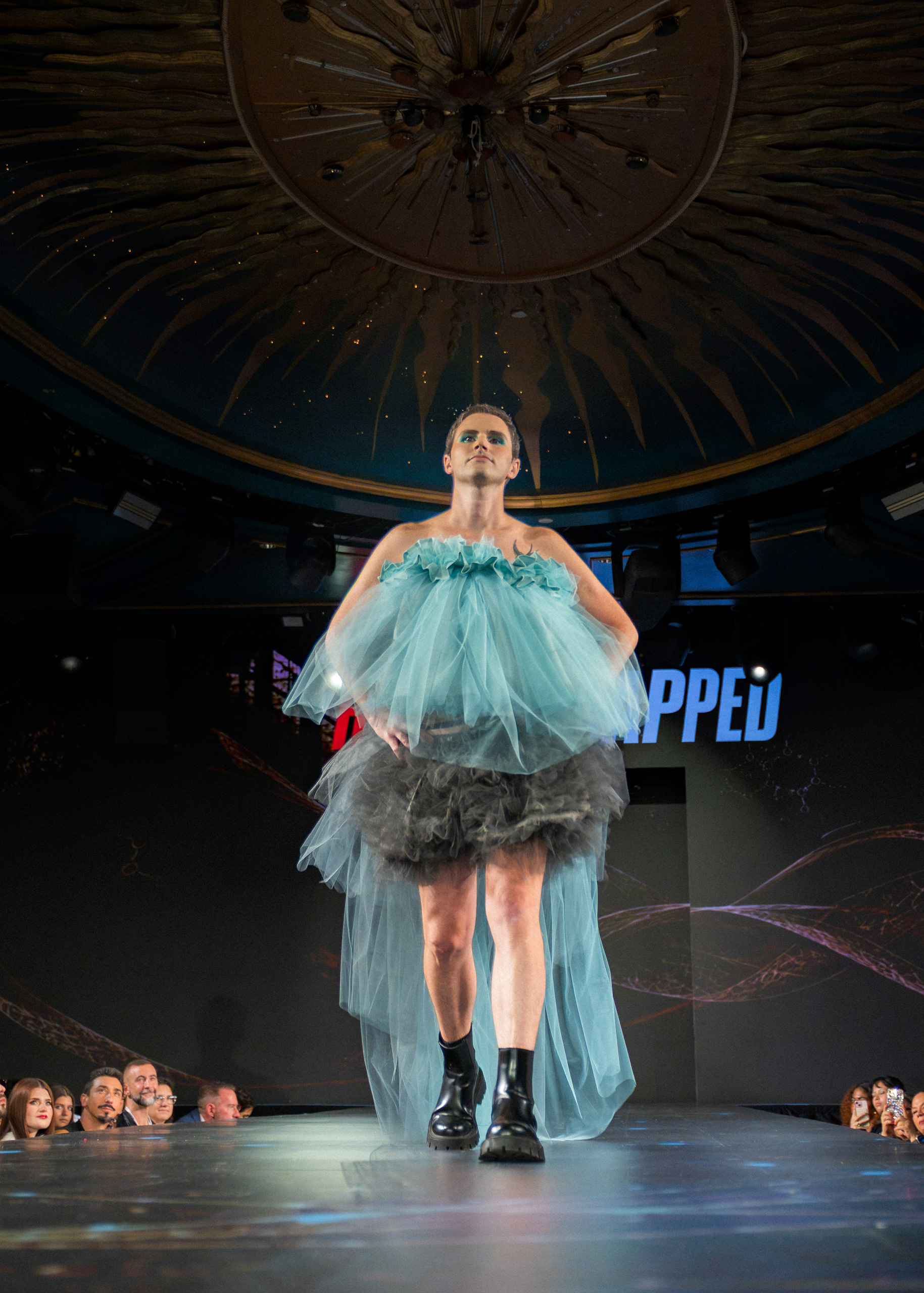
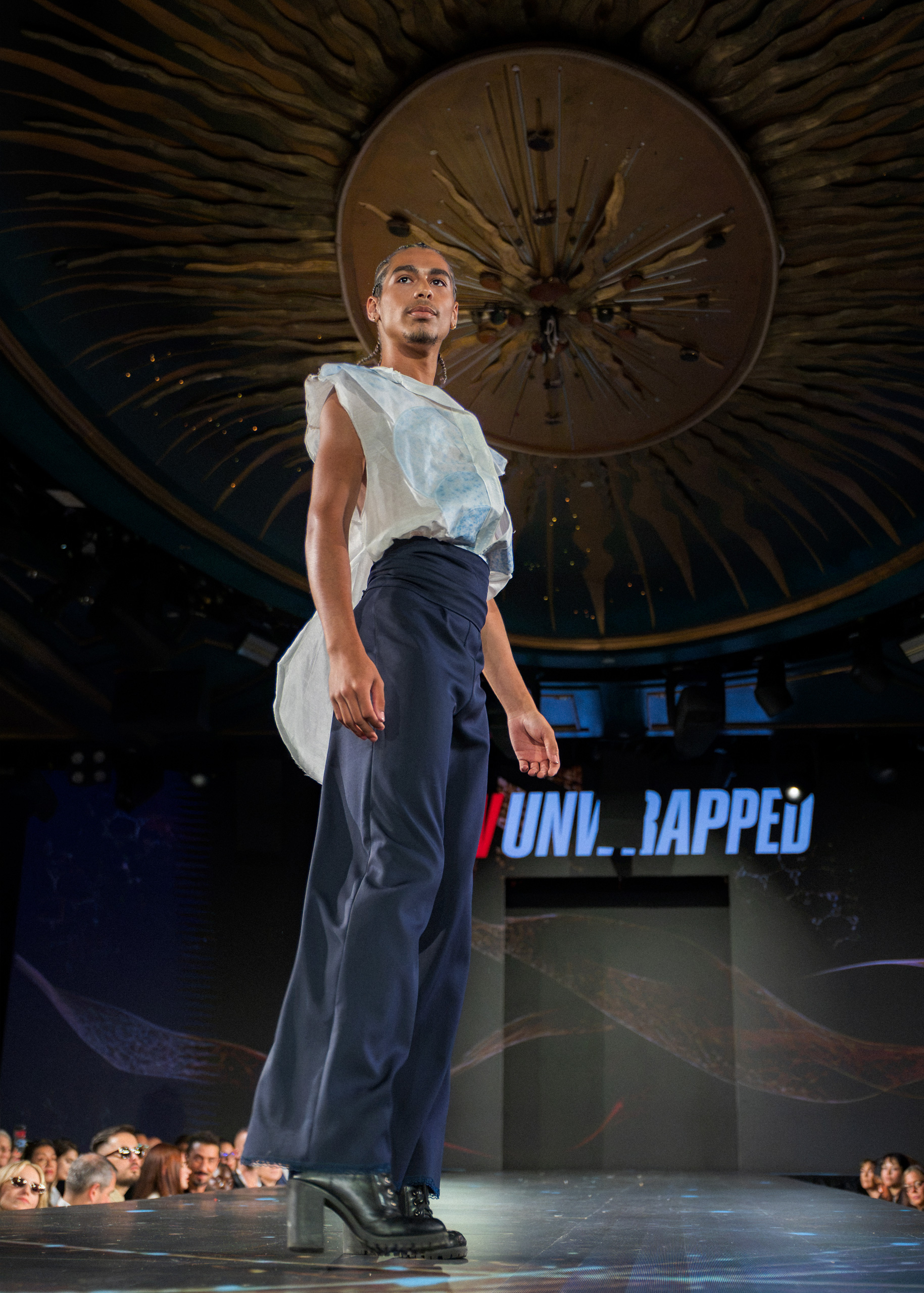
Inspired by the research of epidemiologist Keri Althoff, my garment seeks to embody the spirit of perseverance and optimism demonstrated by the HIV community as well as the diverse age spectrum of people diagnosed.

During our conversations, Keri spoke about the adversity faced by the community this year. From budget cuts harming community resources and research endeavours, to careless AI usage by state officials at global conferences, the current political climate has attempted to put the wellness of this community in jeopardy. Despite these challenges, Keri spoke valiantly of the communal perseverance demonstrated by both people diagnosed with HIV as well as the many research and healthcare professionals fighting against these setbacks.

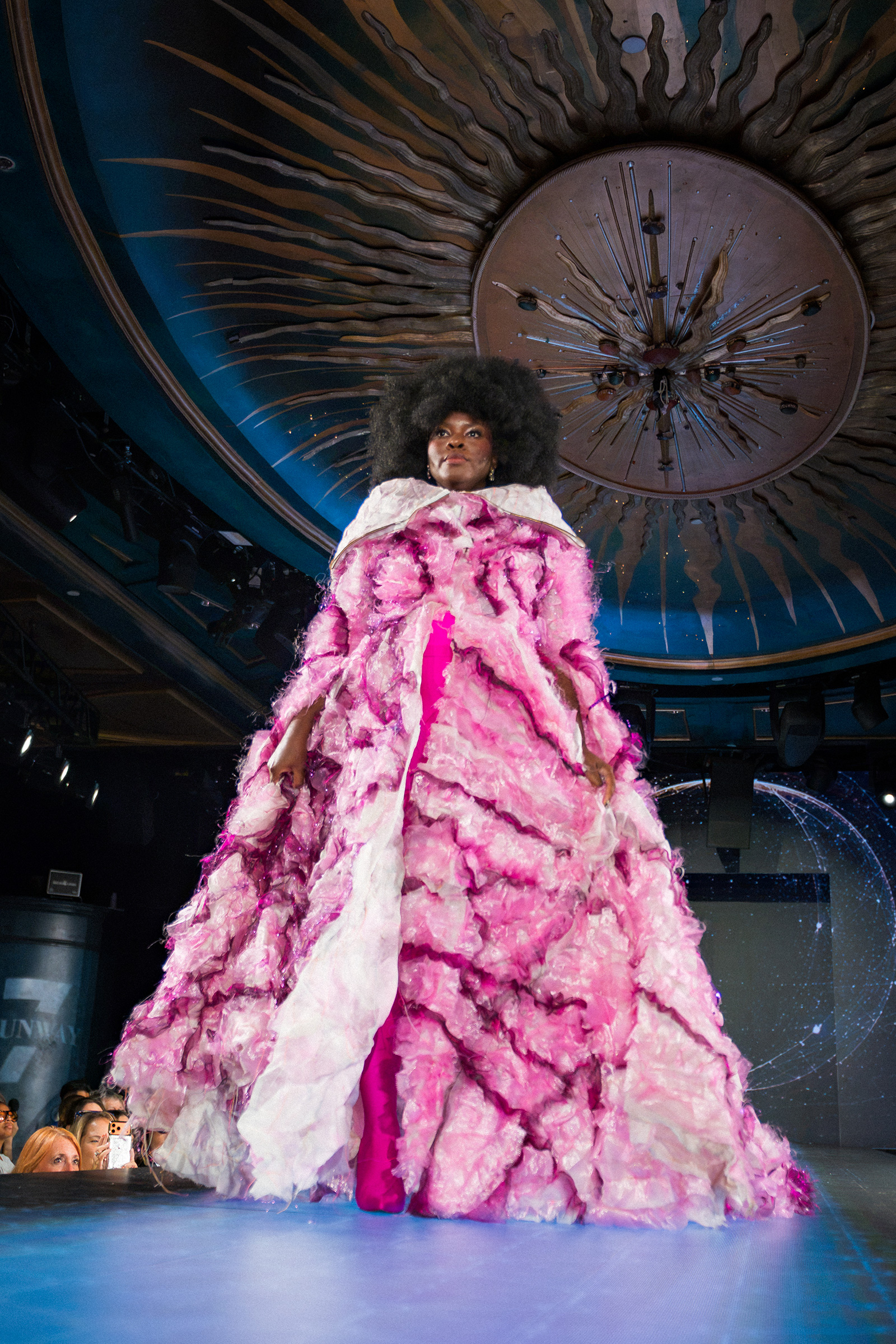
As a depiction of this struggle, the materiality of my garment is delicate yet structured, acting almost as a soft armour. With each layer of tulle, the garment transitions from a harsh grey to a serene sky blue, embodying a spirit of optimism when faced with despair. Youthful and whimsical yet serene and regal, the silhouette of my piece reflects Keri’s specialized research on aging populations, combining the hope for the future of newer generations with the wisdom of community elders.

Anthony Zei + Dr. Allison Agwu

Anthony Zei

My name is Anthony Zei. I completed my Bachelor of Public Health Studies at Johns Hopkins University and then went on to study Menswear design at the Fashion Institute of Technology in NYC. Never far from my creative mind, urban and social dynamics continue to inform my lens on the world and the designs that I produce. When conceptualizing themes for a given collection, I find myself confronted with public health disasters in the world. In response to said disasters and ruptures, there is a strong communitarian thread winding its way through my work – the type of action that can be achieved by a very small number of individuals working together toward a common aim. Often, the clothes I develop are the ‘uniforms’ for the group members participating in this type of action. I am drawn to utilitarian-yet-eye-catching elements in clothing that spans workwear, street style, and traditional tailoring.

Dr. Allison Agwu

Dr. Allison Agwu is a Johns Hopkins Professor, clinician, researcher, mentor, and advocate dedicated to improving the lives of young people impacted by HIV. She leads innovative HIV care programs, directs innovative research, and helps shape national treatment guidelines and policy. Through her work in major research networks and clinical trials, she advances new strategies for HIV prevention and treatment while addressing disparities in care. A prolific scholar and passionate mentor, Dr. Agwu is committed to developing future leaders and ensuring vulnerable and marginalized youth have access to the care, support, and opportunities they need to thrive.

A Posture of Service – This design is a product of work in the clinic and the field, formal, playful, well-worn, and well-loved.

When I received the prompt for the HIV Unwrapped project, the first word that shot through my mind was supplicant, to supplicate. Meaning to pray humbly; make humble and earnest entreaty or petition.

Other similar words include genuflection and service.

This notion of service recurred and resounded throughout my initial conversation with Dr. Allison Agwu. She spoke about the need to meet her patients where they are at in life – not to assume, but rather to work to understand and to remove the idea that the provider knows more or is superior in any way. “If I ever act like I know more, I’ve lost the room.”

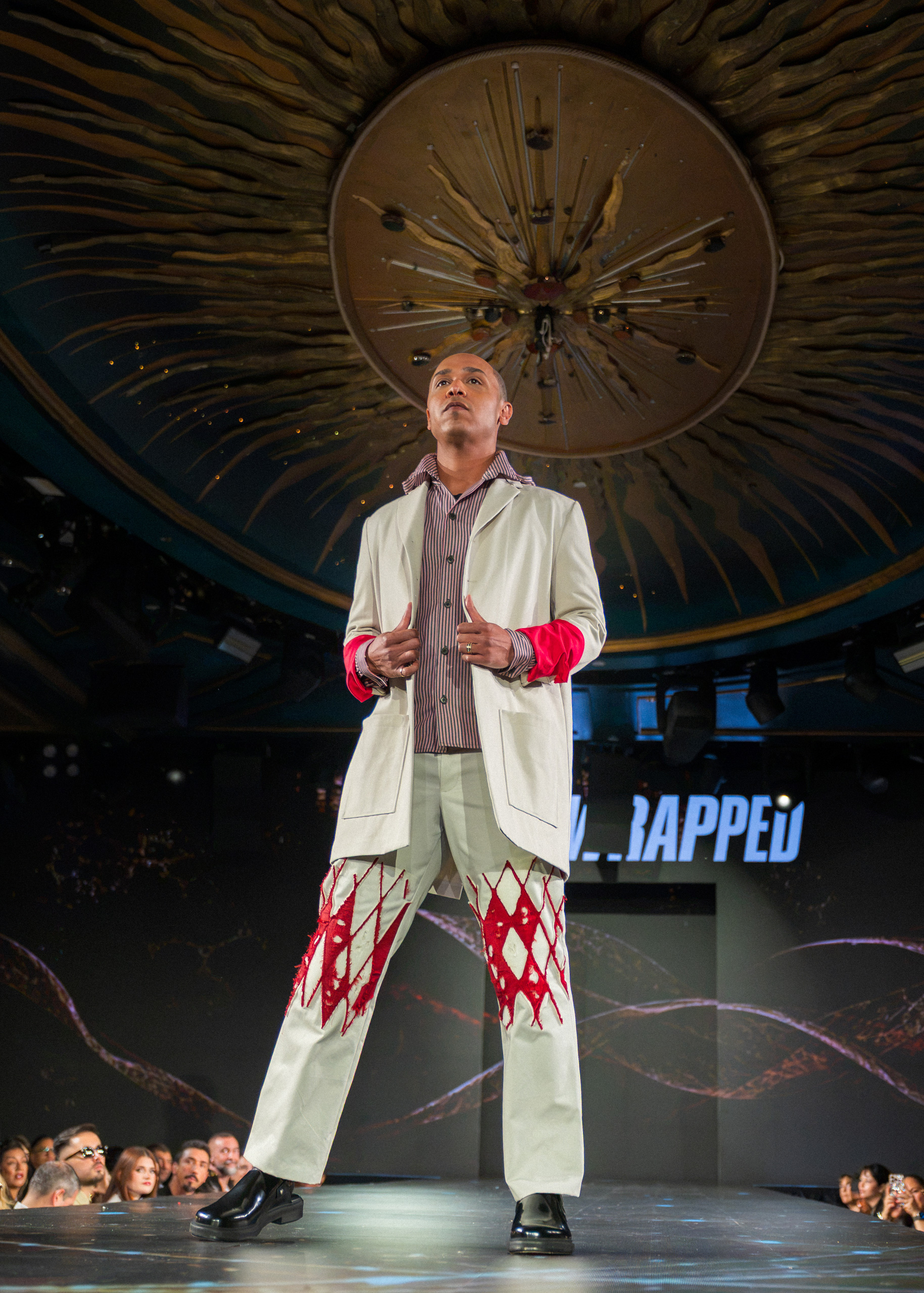
Translating these ideas at the level of a garment, I envisioned a trouser with a padded knee that has seen much wear and distress from walking, bending, squatting or doing whatever it takes to encounter a patient where they are at. The foam rubber pokes through the red sateen that has been top applied to the light grey pant fabric. The outer layer, a lengthened blazer with sharp lapel cut in a medicine-gray cotton twill, is based on a traditional lab coat with the addition of external red shoulder pads. The pads are fictive insignia, a badge of honor for the work Dr. Agwu performs. The top is a playful inversion of formal shirting with a popped collar and a striped hood that grows out of the collar’s edge.

Ellen Amiryan + Dr. Shibani Mukerji

Ellen Amiryan

Ellen Amiryan is a native New Yorker of Armenian ancestry whose practice straddles fine arts and human behavior. After attending Fiorello H. LaGuardia High School, Amiryan graduated with a dual degree in Fine Arts and Psychology from Parsons School of Design, The New School. Her practice merges psychology and art, directly shaping the narrative of her work. Not restricted to any one medium, Amiryan conveys her personality through her handweaving, painting, and tactile sculpture. Her studio serves as a constantly evolving space of experimentation and creation. Ellen Amiryan has shown her work at The Holy Art Gallery in Tribeca, Studio 6 Gallery, Parsons Senior Thesis Exhibition, Gracie Square Art Show, Montefiore Hospital and Bronx Health Center. She received the Silver Key and Honorable Mention in the Scholastic Art & Writing Awards, and her works were displayed at the The Metropolitan Museum of Art’s Uris Center for Education.

Dr. Shibani Mukerji

Shibani S. Mukerji, MD, PhD, is a physician-scientist in neuroinfectious diseases whose work focuses on how HIV affects the brain. As an Associate Professor of Neurology at the Mass General Brigham Neuroscience Institute, she studies brain function, mood, aging, and ways HIV persists in the brain after treatment. She leads a portfolio of programs that move from the laboratory to the clinic, including SOOTHE, an interventional trial testing hormonal approaches to depression, brain health, and immune activation; the BEACON Legacy Program, which relies on tissue donation to map where the virus resides in the brain and which cell types harbor it; and POCKET, which brings portable MRI into the clinic so more people can access brain imaging. She partners closely with people with HIV, caregivers, and advocates to translate science into care. Her mission is to improve the lives of people with HIV through integrated clinical care, neurological research, and education.

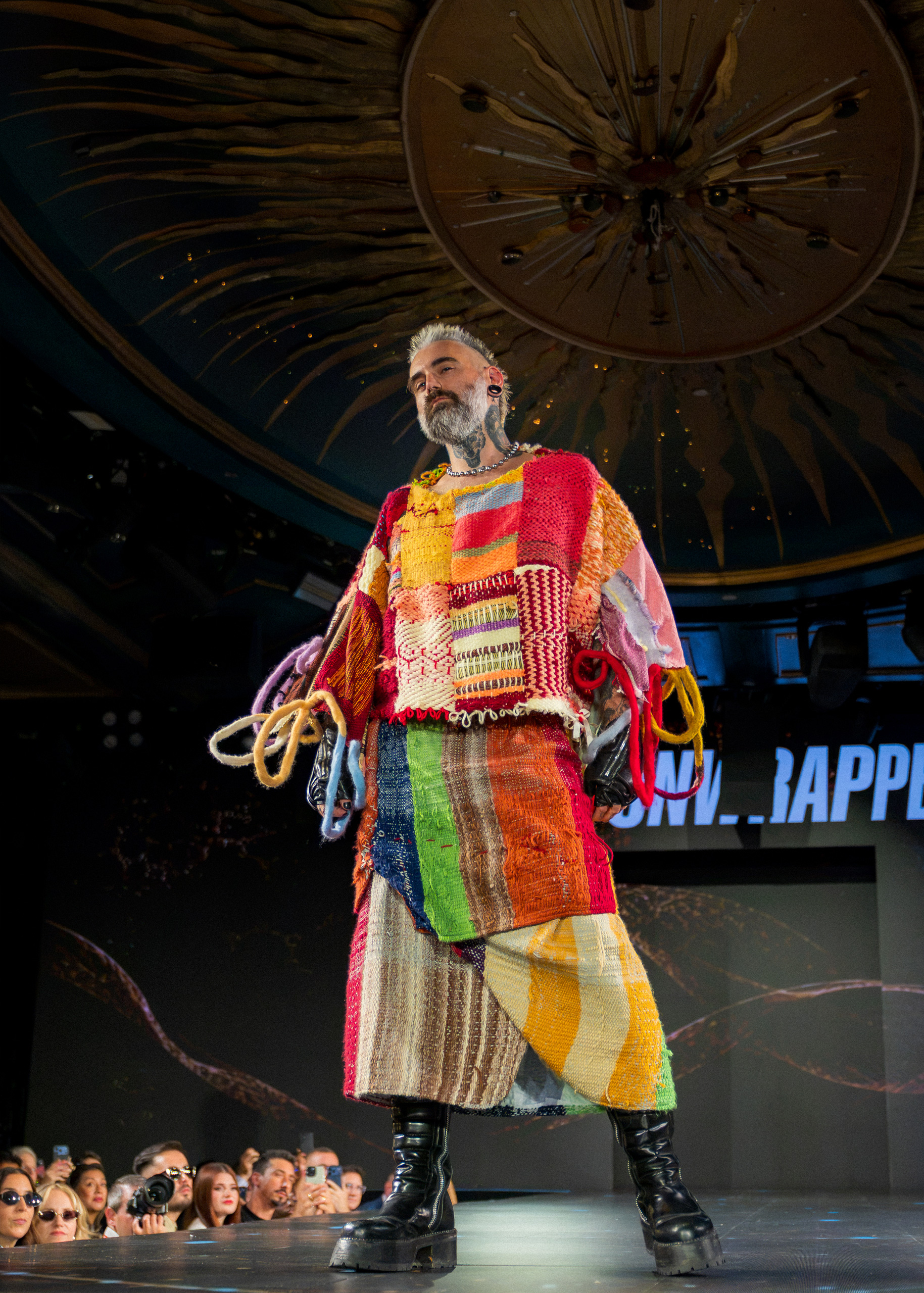
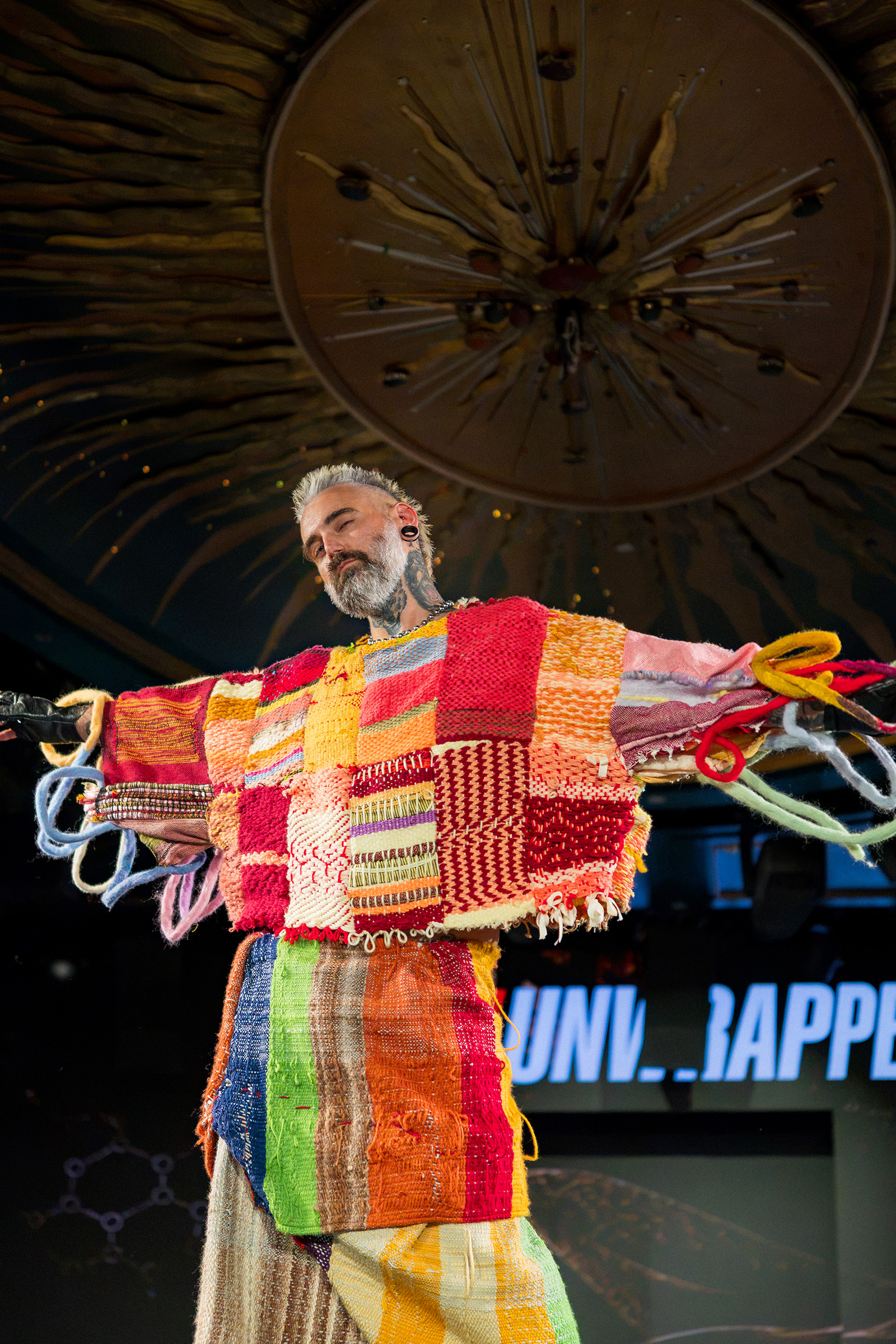
Partnering with Dr. Shibani felt like a natural melody. Our conversations spanned the biology and molecular structures of cells to understand how and why our human behaviors occur. My hope with this artwork, inspired by Dr. Shibani and her research is to bring light to people living with HIV and other infectious diseases that affect the brain, spinal cord, and nerves, allowing the garment to open broader discussions on how we navigate this complex world.

While color is often seen as optimistic, for me it is about the story, expressing my spirit and honoring that as humans, we deserve to feel comfortable in our own bodies. Having a background in psychology, I asked Dr. Shibani about how cells and neurons operate, studying cellular imagery and microscope structures to understand their movement and overall form. I translated these concepts into my garment through slow, manual handweaving. Psychologically, this repetitive labor acts as a meditative outlet to release tension, while creating an artwork where people feel seen, heard, validated, and comforted.

There is a deep crossover between weaving and biology, from fibers mirroring skeletal muscle under a microscope to the metaphorical bond between art and science. As someone learning through this process, I hope to spread awareness and support continued research, using color and texture to remind us how deeply human we all are.

Garrett Ferrara + Dr. LaRon Nelson

Garrett Ferrara

Garrett Ferrara is a fashion designer and senior at Parsons School of Design in New York City. His work explores the relationship between memory, grief, and the rituals that shape how we carry loss. Rather than treating clothing as decoration, he approaches it as a vessel, one capable of holding history, emotion, and the traces of lived experience. Through his practice, Ferrara seeks to make difficult subjects tangible, inviting reflection on mortality, resilience, and the ways people continue to live with what cannot be undone. HIV Unwrapped 2.0 marks an opportunity to explore these ideas through dialogue with HIV researchers, approaching the project with a commitment to listening, learning, and honoring the stories that inform the work.

Dr. LaRon Nelson

Dr. Nelson is the Independence Foundation Professor of Nursing at Yale University and Director of the Community Capacity, and Economics Core in the Center for Interdisciplinary Research on AIDS (CIRA) at the Yale School of Public Health. He specializes in human-centered implementation science—a field he advances by building synergistic bridges between scientific inventions, healthcare systems, business model innovation, and sustainable community development. His research focuses on designing and testing business models and operational strategies to scale the implementation of evidence-based practices, particularly for HIV and posttraumatic stress. He is the founder of HIV Implementation Science to Optimize Research Impact (HISTORI), a US-based network of community, clinical, business, and academic stakeholders working to translate biomedical discoveries into economically sustainable clinical and community impacts. He also founded the Kumasi & Accra Project to Prevent AIDS (KAPPA), an implementation science alliance focusing on sustainable, community-led HIV prevention and treatment solutions in Ghana. He is an elected Fellow in the New York Academy of Medicine and the American Academy of Nursing.

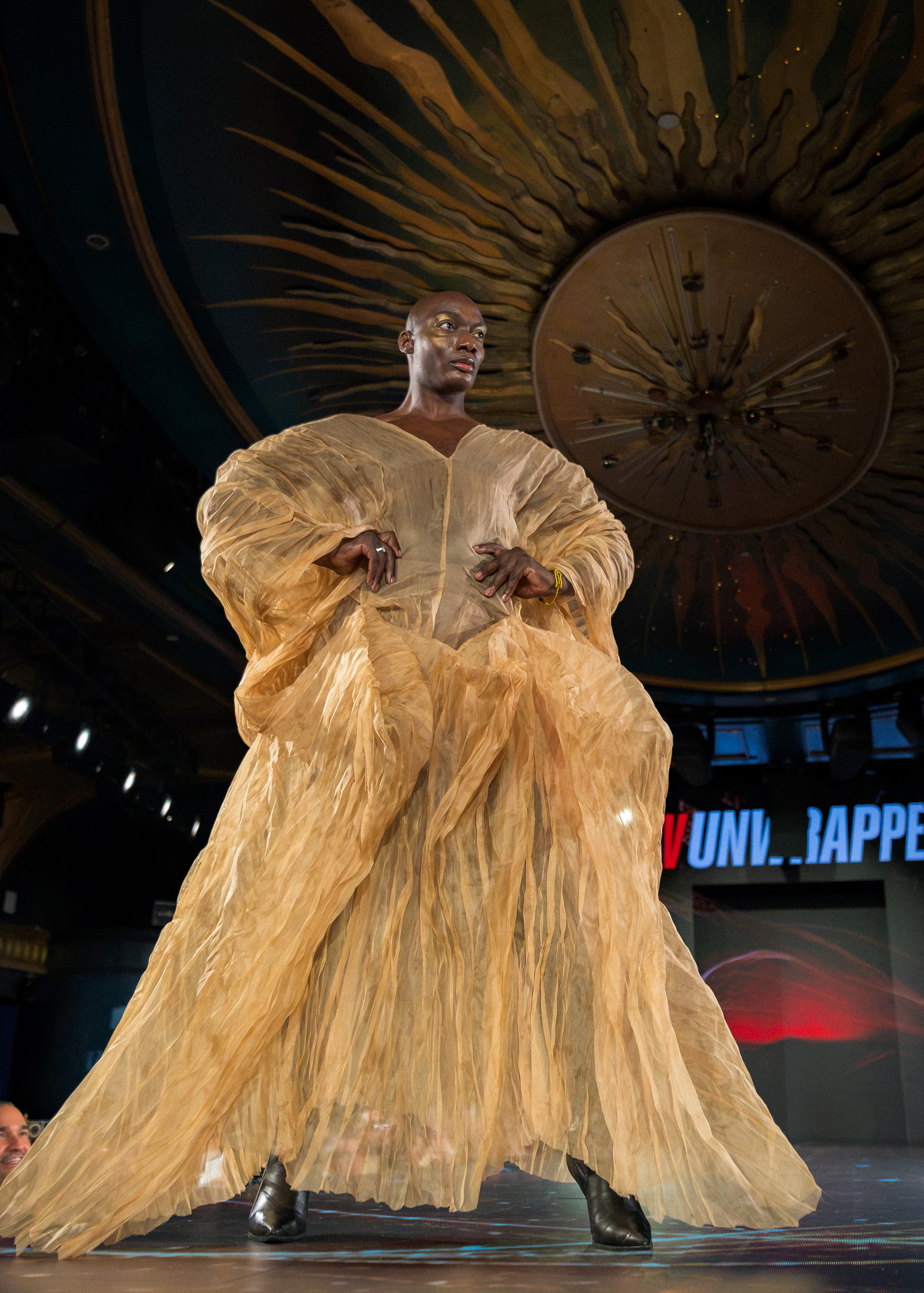
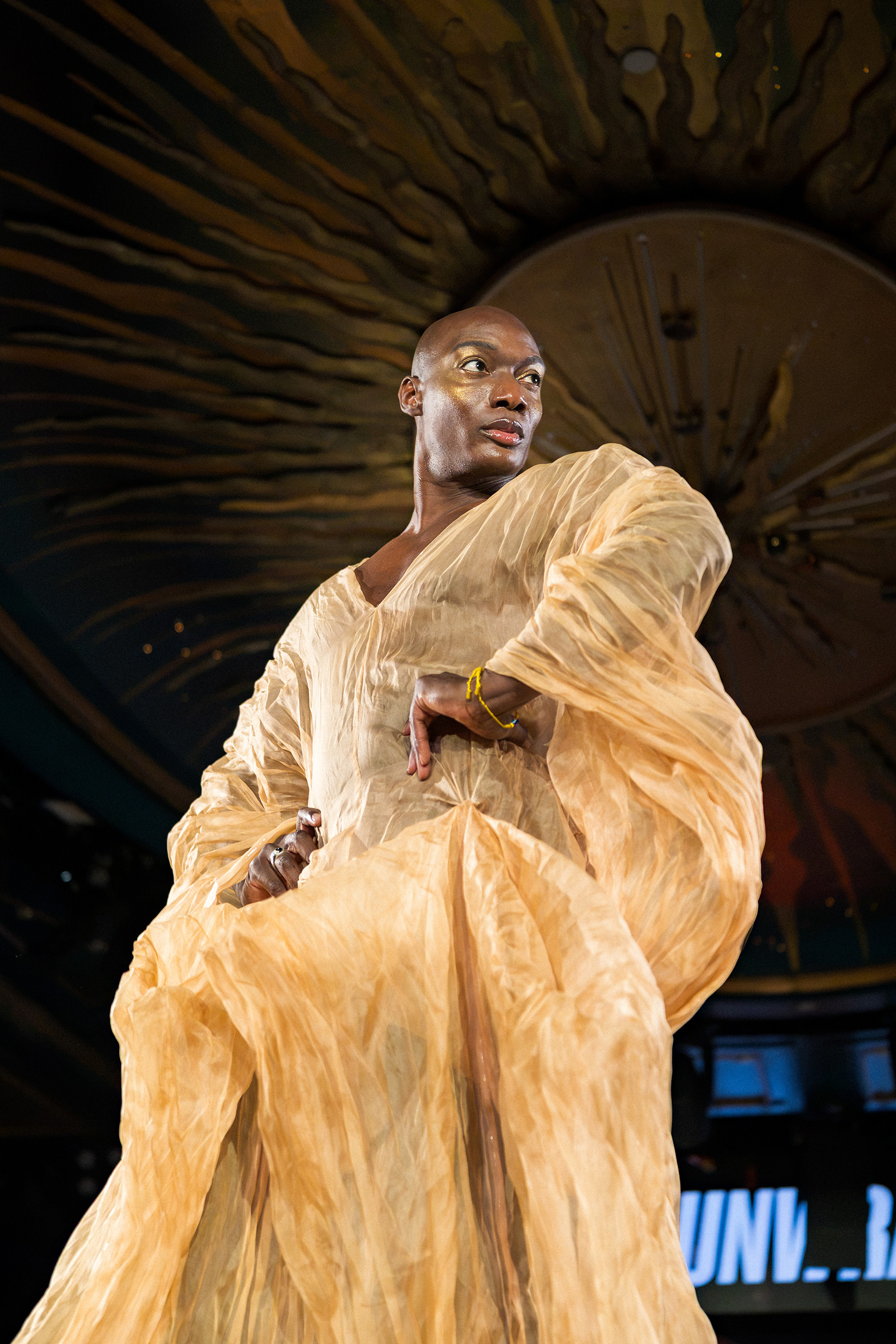
Rather than telling viewers what to see, this garment gives space to arrive at meaning for themselves, asking what happens when the body is first seen through stigma of illness, deterioration, and death before the living person within it is allowed to emerge.

In my conversations with HIV scientist LaRon Nelson, I was struck by how he and his team responded to increasing pressure from the new administration, which restricted how they could speak about central themes within their research. Rather than allowing those limitations to silence the work, Nelson described creating a gallery experience where viewers encountered images and formed their own interpretations instead of receiving a fixed explanation. That approach became the foundation of this look.

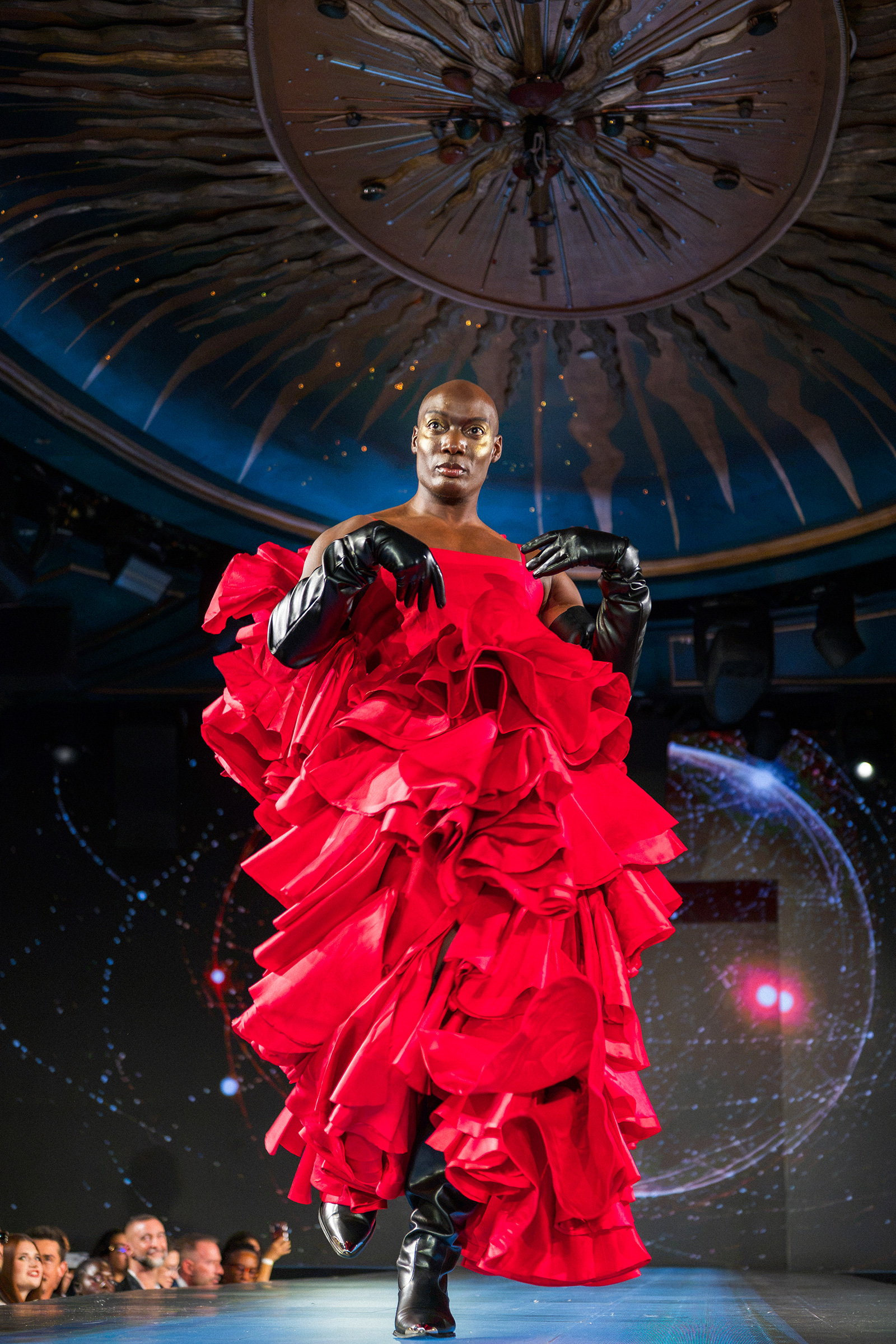
From a distance, the garment appears distressed, decayed, and almost lifeless. Sheer, translucent fabric is torn, layered, and draped into a silhouette that references mourning dress. Its first impression speaks to grief: the history of death surrounding HIV, as well as the sense of mourning Nelson described around cuts to HIV research, funding, and the people whose work is affected.

As the model approaches, that reading changes. Beneath the fragile outer layer is a living body. Black, queer, exposed, oiled, and luminous. What initially reads as death becomes life.

The garment does not instruct the viewer toward one conclusion. Instead, it creates a shift in perception, asking the audience to confront an initial assumption and then reconsider it. Like the gallery approach Nelson shared with me, the design leaves space for the viewer to make the final connection themselves, creating a more personal moment of recognition and learning.

Giani Rocha-Barnes + Dr. Jirair Ratevosian

Giani Rocha-Barnes

Giani Rocha-Barnes is a New York based artist and designer. With a foundation in visual art, he began by creating graphic designs and screen printing garments with his own patterns. During his time serving in the military, he pursued a visual arts education and pushed himself to develop his own clothing line, MXA, which now serves as the foundation for his collections. Drawing inspiration from his experiences, cultural upbringing, and personal interests, he creates work that bridges the gap between streetwear and luxury fashion.

Dr. Jirair Ratevosian

Dr. Jirair Ratevosian is a public health scientist, policy leader, and advocate focused on advancing health equity, strengthening global health systems, and translating evidence into policy. He is a Research Scholar at the Duke Global Health Institute and a Senior Associate (Non-resident) with the Global Health Policy Center at the Center for Strategic and International Studies. He advises organizations advancing HIV prevention, artificial intelligence, and health delivery innovation. Previously, he served as Acting Chief of Staff and Senior Health Equity Advisor to the U.S. Global AIDS Coordinator, shaping PEPFAR policy and global health strategy. His career includes roles at Gilead Sciences, amfAR, and in the U.S. House of Representatives with Congresswoman Barbara Lee. He writes the Lights, Camera, Equity newsletter on Substack and has published extensively in POZ, TheBody, TIME, and Playboy. He holds a DrPH from Johns Hopkins University, an MPH from Boston University, and undergraduate degrees from UCLA.

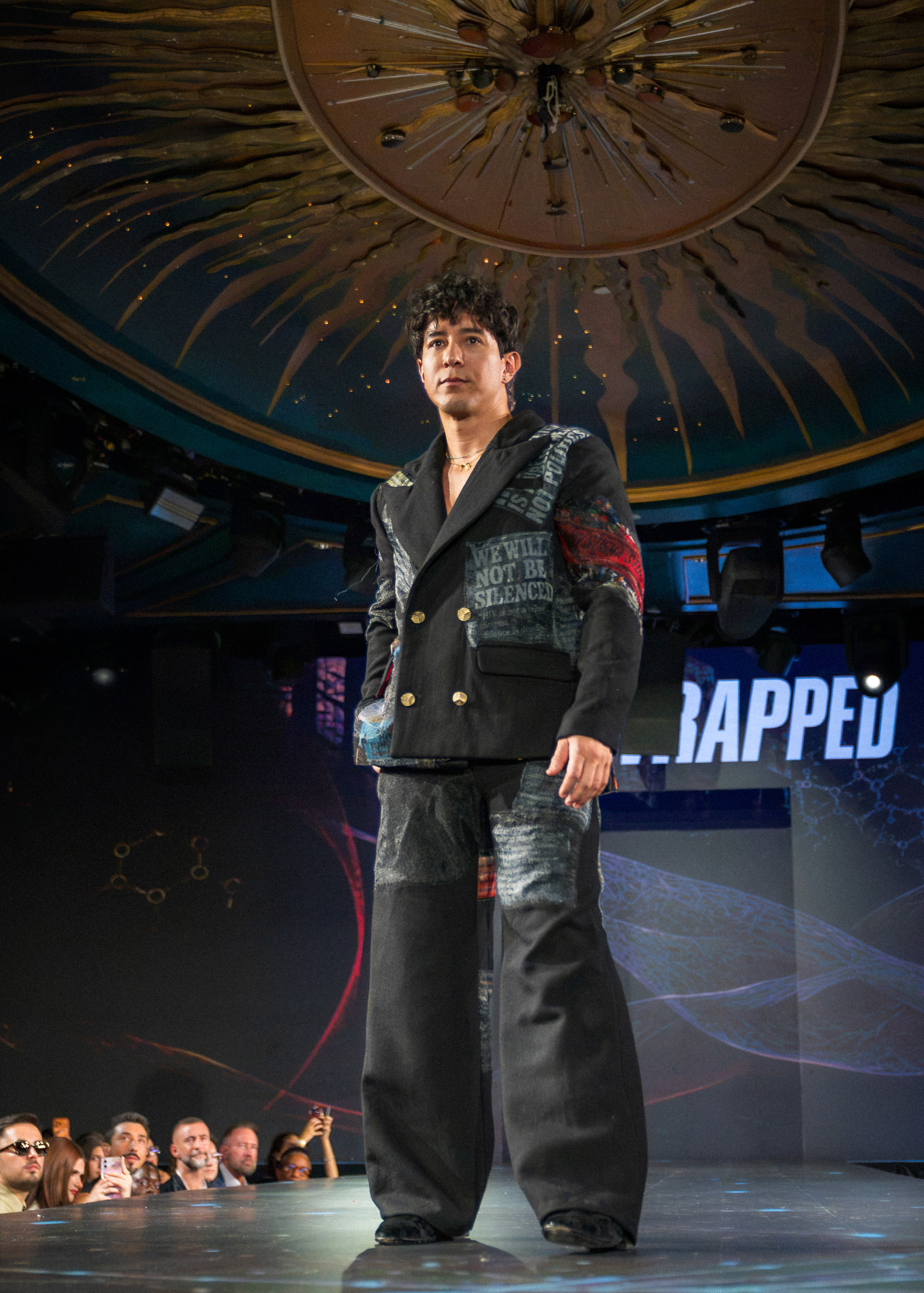
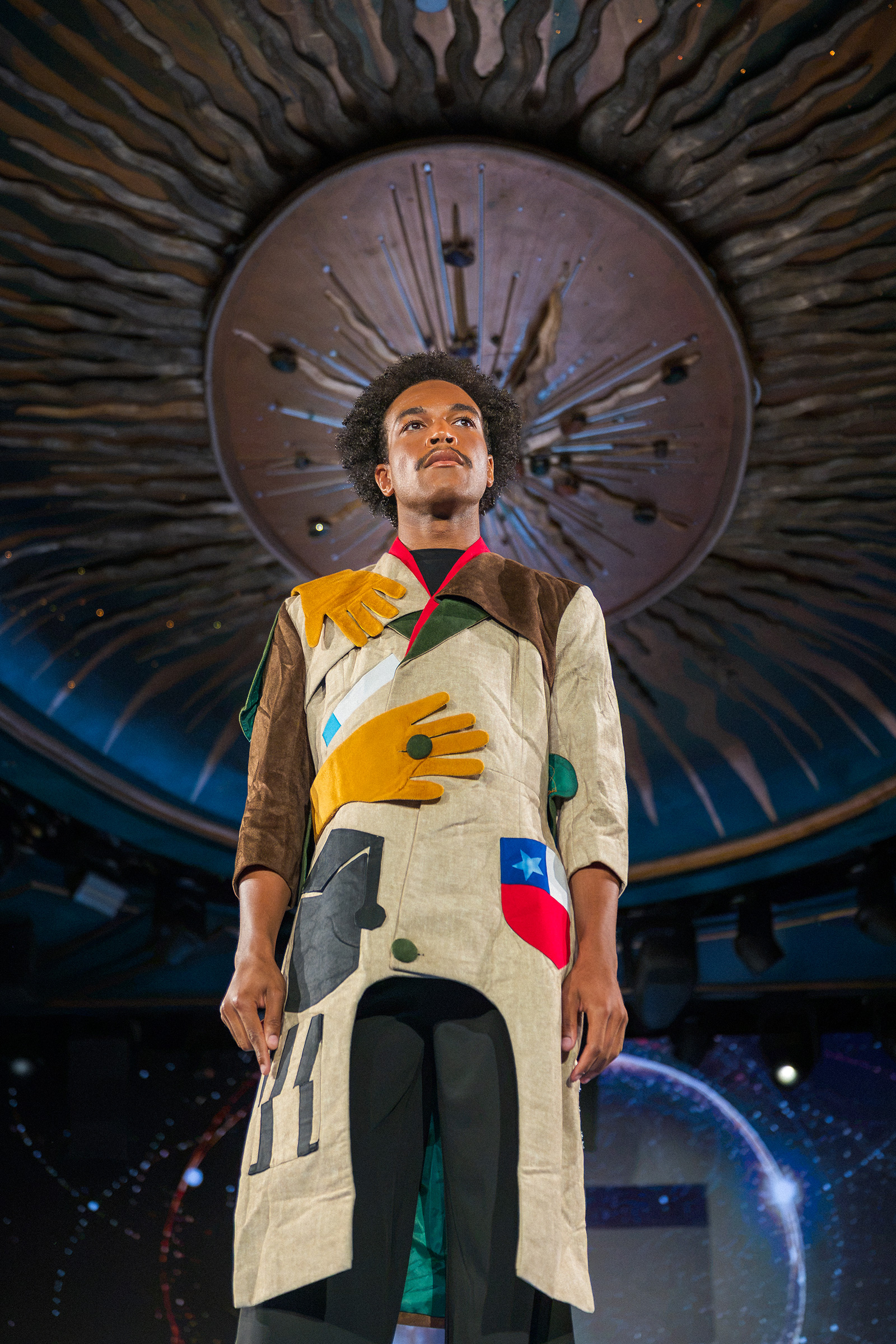
The intention behind this power suit was to showcase the harmful and dangerous policies put in place for people living with HIV.
Partnering with Dr. Jirair Ratevosian, we explored ways to showcase people living with HIV beyond working in a lab coat. The real work that needs to be done is to shape the policies that affect people living with HIV. Upon researching many policies put in place today, it was upsetting the dehumanizing nature these policies come across, and we thought it would be important to show that.

The suit is oversized, commanding presence, and printed with HIV policies throughout. It’s meant to intrigue and educate not only the wearer but the people around who will see it and want to know more. We hope with this suit that we can have more of a foot in the door to enact change to policies.
Joelle Helena + Dr. Francisco Ruiz

Joelle Helena

Joelle Helena is passionate about exploring the intersections of fashion, technology, justice and business. She aims to use digital tools to enhance the fashion experience by blending virtual and physical elements for immersive storytelling. Her goal is to amplify underrepresented voices and to spark discussions. Her main sources of inspiration are people, places and things. In pursuing these ambitions, she aspires to inspire multifaceted lives that reshape the fashion industry with purpose, authenticity, and creativity. Her journey as a designer is a continuous quest for self-improvement, pushing creative boundaries, and serving as a voice for the voiceless.

Dr. Francisco Ruiz

Dr. Francisco Ruiz is a public health leader and strategist with more than 20 years of experience advancing health equity through policy, partnerships, and systems change. He previously served as Director of the White House Office of National AIDS Policy and held senior leadership roles at the U.S. Centers for Disease Control and Prevention (CDC). He earned a Doctor of Public Health from the Harvard T.H. Chan School of Public Health and is Founder and Principal of Adelante Strategy Group, a public health and strategy consulting firm.

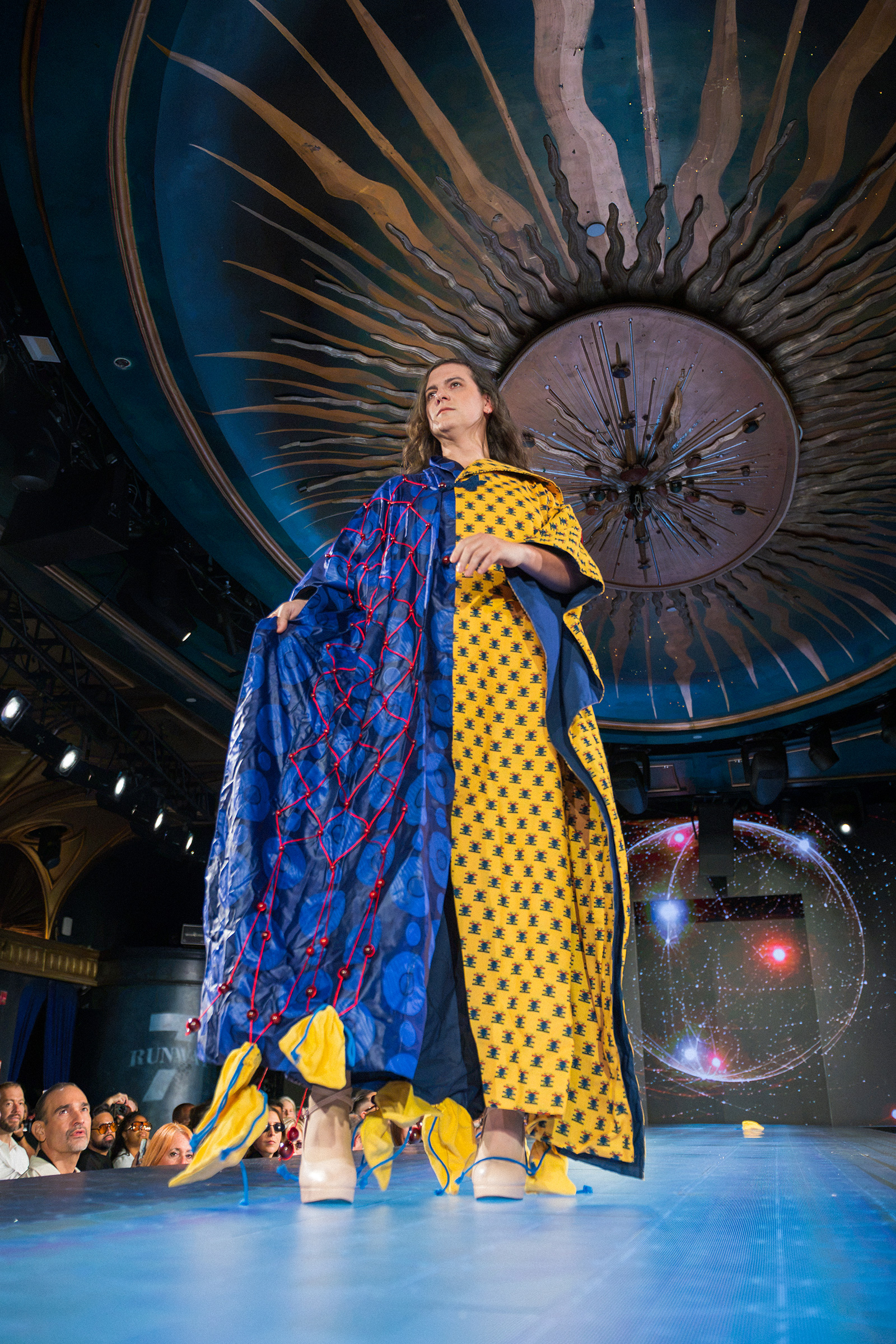
The Hebrew word derekh refers to a way, road, or path, the course one takes when the destination is not yet fully known. Paths is rooted in my ongoing exploration of the unseen: the things we carry, believe, endure, and become before they can be understood from the outside. In developing this piece, I was also drawn to the work of Francisco Ruiz, DrPH, MS, whose HIV research and public health work considers the realities that shape how people experience HIV beyond the clinical setting. His work encouraged me to think more deeply about the weight of stigma, perception, and the stories we attach to the body.

The piece considers the uncertainty of moving forward while trusting that there is purpose within the journey. The elongated silhouette and exaggerated trousers disrupt the body’s expected proportions, while cascading fringe creates lines that shift and separate with movement, tracing the many directions a life can take. Within the garment’s darkness, gold is concealed beneath the surface, appearing as something discovered rather than immediately given. It becomes a quiet representation of what can exist within us before it is ever visible: strength, promise, faith, and the possibility of something greater than what the present moment reveals.

Paths is ultimately about continuing forward without needing to possess the entire picture. It is about recognizing that what we carry does not have to become who we are, trusting that what is being formed within us is preparing us for where we are going, and understanding that sometimes the path itself is where we are being shaped.

Mason Strange + Dr. Adam Ward

Mason Strange

Mason Strange is a fashion designer and MFA candidate in Fashion Design and Society at Parsons School of Design whose work sits at the crossroads of Americana, queer culture, and historical storytelling. He has a background in Industrial Design from Rochester Institute of Technology, which leads him to address fashion through a functional lens. Inspired by his upbringing in Greensboro, North Carolina (a major denim hub), his collections reimagine familiar symbols of Westernwear and Americana through a queer perspective, asking how clothing reflects and critiques culture.

Dr. Adam Ward

Adam Ward PhD is a Research Program Manager and Biostatistician at Weill Cornell Medicine. Dr. Ward’s research over the past ten years has focused broadly on HIV persistence and cure strategies, spanning basic science studies and animal models of HIV to human cohort studies and clinical trials – towards the goal of improving immune responses and developing novel therapies capable of achieving antiretroviral (ART)-free virological control. Dr. Ward currently serves as the Program Manager for the NIH-funded ‘Research Enterprise to Advance a Cure for HIV’ (REACH) Martin Delaney Collaboratory. In these roles, he helps to manage day-to-day operations of the collaboratory and facilitate scientific interactions between its members. He also works on the design and analysis of related clinical and basic science HIV cure research studies, including as an investigator with the ACTG HIV Cure Transformative Science Group. Dr. Ward holds a PhD in epidemiology from The George Washington University.

While HIV cure research remains a challenging and highly technical undertaking, continued advances in science offer optimism toward developing a scalable and effective cure. This look draws from the visual language of HIV cure research, particularly the scientific assays used to study the virus and the body’s immune response. The main assays referenced were flow cytometry and Enzyme-Linked ImmunoSpot (ELISpot).

These visualizations became the basis for the garment’s color and pattern. The high-contrast colors found within scientific diagrams, alongside the work of visual artists who have responded to the HIV/AIDS epidemic, informed the garment’s color palette. The geometry of scientific graphs and assay diagrams was translated into the garment’s pattern lines.

By translating the visual systems of HIV research into color, pattern, and construction, the look considers how scientific imagery can become a form of visual storytelling that reflects both the complexity of cure research and the optimism surrounding its continued advancement.

Timo Kurz + Dr. Judith Auerbach

Timo Kurz

Timo Kurz explores craftsmanship as a design language rather than merely a method of production. His practice investigates how inherited techniques, materials, and construction methods can carry cultural, psychological, and emotional meaning. Across his work, clothing becomes a material language through which invisible conditions are translated into physical form. Through construction, material research, and craft, he explores memory, identity, and the systems that shape human experience. His garments exist between object and body, giving form to experiences that often remain unspoken. Rather than illustrating a narrative, his work invites viewers to encounter emotional and psychological states through raw material itself.

Dr. Judith Auerbach

Dr. Judith Auerbach is a public sociologist and scientist-activist whose career bridges research with social justice advocacy. She is Professor of Medicine at the University of California San Francisco and an independent science and policy consultant, advising governmental, non-profit, and academic entities on scientific agenda-setting, strategic planning, and linking research to policy. Her scholarship centers on social factors and health, HIV and women, and community-engaged research. Throughout her career, Dr. Auerbach has championed a multi-disciplinary HIV research response centered on community needs, fighting to embed social and behavioral science within the biomedical enterprise. She has held leadership roles at the National Institutes of Health, White House Office of Science and Technology Policy, amfAR, and San Francisco AIDS Foundation, and served on PEPFAR's Scientific Advisory Board and the International AIDS Society's Governing Council. She received the 2014 ASA Feminist-Scholar-Activist Award and was elected a lifetime AAAS Fellow in 2022.

My conversations with Dr. Judith Auerbach centered on the different realities that shape experiences of HIV, particularly the ways gender, social background and marginalization can shift both the questions research asks and the needs it seeks to address. Her work with women became the starting point for this three-piece look and for its deliberate negotiation between traditionally masculine and feminine codes.

Constructed entirely in white denim, the garment references the clinical and medical context of HIV. Instead, the exaggerated proportions, fluid layers and disrupted tailoring create a feeling of suspension and subtle unease. Familiar elements of menswear appear displaced within a more feminine silhouette, as though something belongs and, simultaneously, does not. The denim is waxed, transforming its normally opaque surface into something partially translucent. What should conceal begins to reveal. For me, this became a way of addressing vulnerability and exposure: the feeling that can accompany a diagnosis when something deeply personal suddenly seems capable of defining how one is perceived by others.

At the same time, the garment reflects a tension that remained with me from our conversations: extraordinary progress in HIV treatment exists, but progress should never be mistaken for permanence. Rather than illustrating HIV research literally, the look holds these contradictions together.

Yuhao Tu (Ryan) + Dr. Demetre Daskalakis

Yuhao Tu (Ryan)

Ryan Tú is a Chinese fashion and jewelry designer based in New York, currently pursuing an MFA in Fashion Design and Society at Parsons School of Design. He is the founder and creative director of UNPROFILE, an independent jewelry brand established in China that has presented collections during Shanghai Fashion Week and China International Fashion Week. His practice spans fashion and jewelry, exploring structure, emotion, and contemporary expressions of identity. In 2026, Ryan was named a finalist for the CFDA Scholarship Fund by the Saint Laurent team. In 2025, UNPROFILE was selected for the second round of the VOGUE China Fashion Fund. In 2023, he received the Gold Award at the 30th Hempel Award China International Young Fashion Designers Contest.

Dr. Demetre Daskalakis

Dr. Daskalakis is the Chief Medical Officer of Callen-Lorde Community Health Center in New York City, a global leader in LGBTQ+ healthcare. Prior to this role, he has held major leadership roles at the NYC Department of Health, overseeing HIV, TB, STD, immunization, and laboratory programs, and managing responses to measles, Legionella, and New York City’s initial COVID-19 outbreak. At the CDC, he directed the Division of HIV Prevention and later led the National Center for Immunization and Respiratory Diseases, where he managed strategies for influenza, COVID-19, RSV. He played a critical role in national responses to respiratory virus and managed high-profile outbreaks including measles and avian influenza.  As Deputy Coordinator of the White House National Mpox Response, Dr. Daskalakis’s innovative approaches led to a dramatic reduction in daily cases. Throughout his career, he has championed health equity, LGBTQ+ health, and evidence-based policy, shaping national and global strategies in HIV prevention and vaccination.

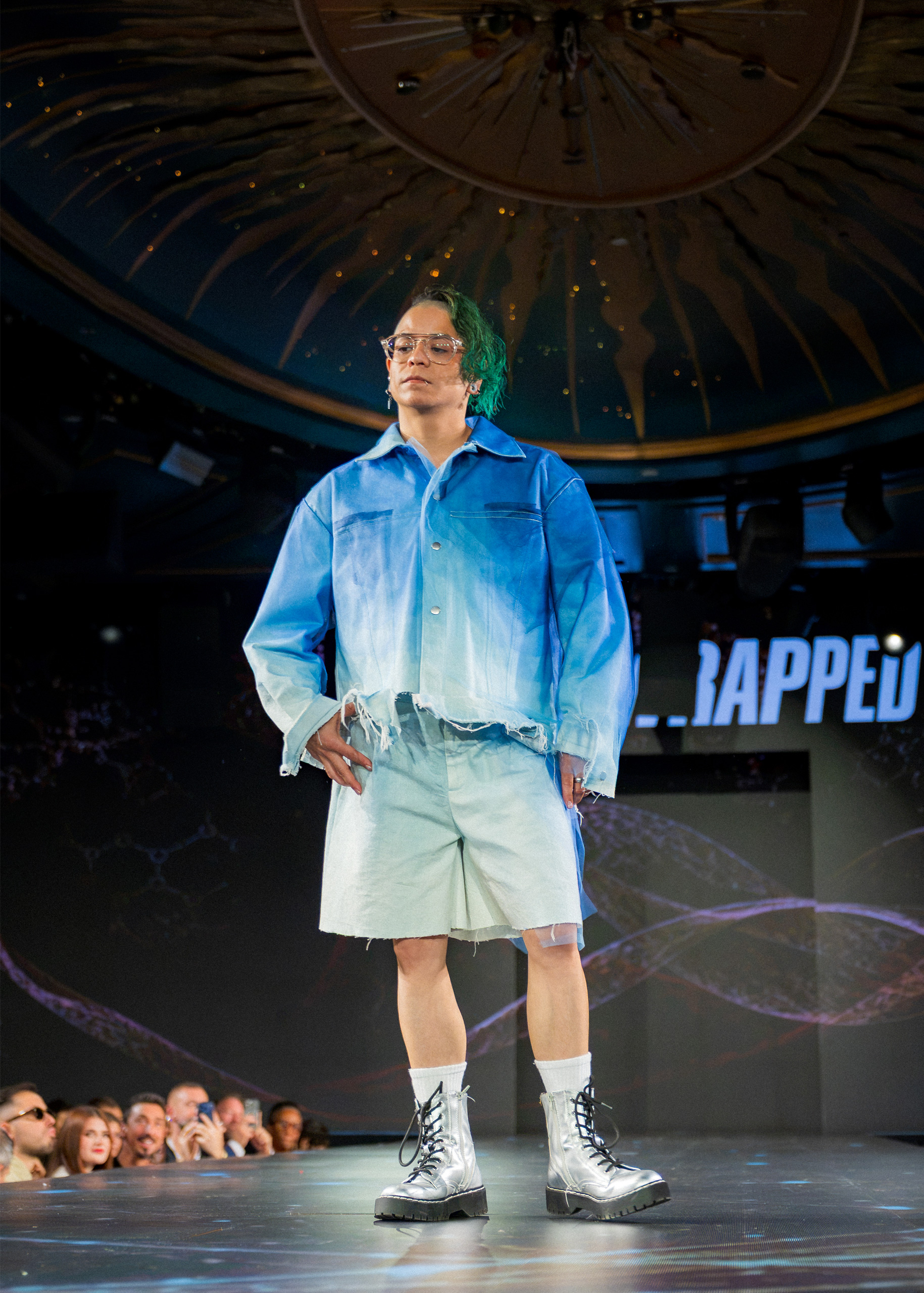
In my first conversation with Demetre, he described arriving in New York in the early 1990s and living through the most devastating years of the HIV/AIDS crisis, an experience that led him to dedicate his academic and professional life to this field. His concern about recent federal cuts and proposed reductions to HIV prevention, treatment, and community-based services made the present feel like an unsettling echo of that history: medicine and technology have advanced, yet public discourse and governmental responsibility appear to be moving backward.

In response, I watched the movie 120PM and studied archival photographs of LGBTQ+ protests in New York, including demonstrations on Wall Street, searching for visual languages of urgency, solidarity, and resistance.

This research informed a cropped, 90s-inspired boxy denim jacket and denim cargo shorts-archetypes I chose for their unisex quality and their ability to take on different meanings across bodies and gender identities.

Bleached and distressed traces of pockets and closures appear functional from a distance but reveal themselves up close as absent, damaged, or unusable, reflecting institutions that preserve the appearance of service while failing the people they are meant to protect. Layers of mesh and organza create shifting transparencies, expressing intersecting identities and insisting that a person living with HIV can never be reduced to a diagnosis, but remains a family member, worker, artist, friend, and full, complex human being.

Zara Annette + Dr. Renata Sanders

Zara Annette

Zara Annette is a fashion designer born and raised in the south of England. She moved to New York City at 18 after earning a merit scholarship to pursue her BFA in Fashion Design at Parsons School of Design, graduating in 2025 with honors. She is currently back at Parsons, working towards her MFA in Fashion Design & Society. Zara uses fashion to explore the fragile space between humanity and technology, blending her British heritage and passion for historical literature in conjunction with modern functionality to craft thoughtful, timeless garments. Her approach combines romantic nostalgia and futuristic minimalism, featuring structured silhouettes and intricate, ethically sourced materials that evoke both strength and vulnerability. Dedicated to ethical and traceable, human-centered design, Zara’s exploration of form and narrative seeks to craft garments that speak to identity, resilience, and a future of fashion that uses the past to move forward.

Dr. Renata Sanders

Dr. Renata Arrington Sanders is the Division Chief of the Craig-Dalsimer Division of Adolescent Medicine at The Children’s Hospital of Philadelphia, Professor of Pediatrics and Medicine. She has spent over 26 years passionately caring for young people living with and at-risk for HIV, cultivating research, practice and strategies that address the intersectional and multimodal needs of young people across their life course and into adulthood, and improving the lives of Black and Latine young people who are sexually and gender diverse. Through her work on the International AIDS Society Governing Council, Board of Directors of SIECUS, American Sexual Health Association, CDC/HRSA Advisory Committee (CHAC) on HIV, Viral Hepatitis and STD Prevention & Treatment, Society for Adolescent Health and Medicine, and as a Scientific Member on the US Department of Health and Human Services Panel on Antiretroviral Guidelines for Adults and Adolescents, she seeks to end HIV in those most vulnerable.

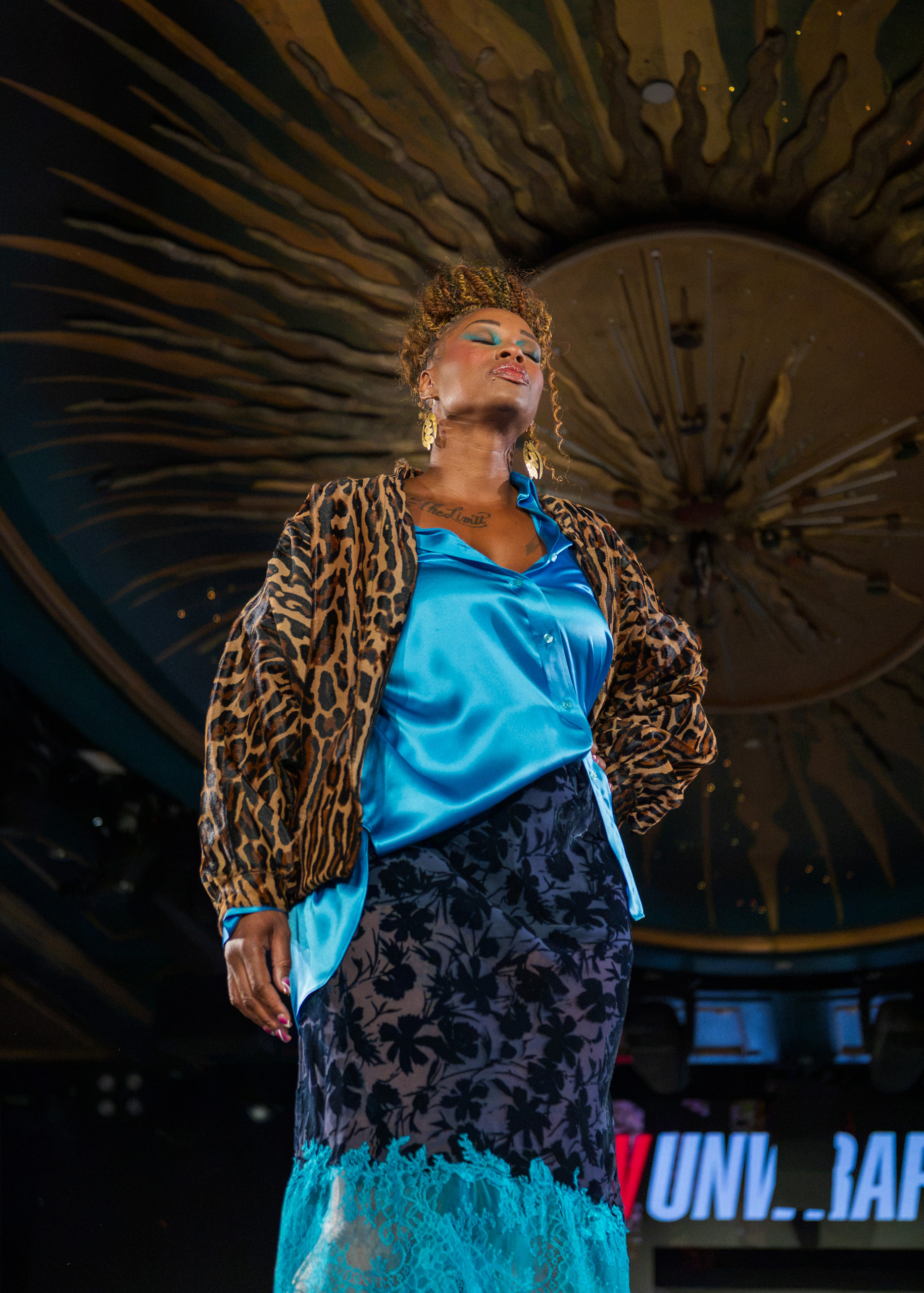
This look began in conversation with Dr. Renata Arrington Sanders, whose work centers on adolescent HIV prevention, gender-affirming care, and services for sexual and gender diverse youth. We talked about compassion and human connection—how central both are to helping someone through a diagnosis, and how visibility itself becomes a form of care. That conversation kept returning me to one idea: adolescence as the moment you first practice self-authorship through dress, trying on identities to find how you want to be seen.

The design pays homage to Jonathan Larson’s Rent on its 30th anniversary. It was my first exposure to HIV awareness in media, and I’m grateful to have had access to art that centers the human side of the virus and portrays people fighting for joy, community, and dignity rather than just succumbing to a diagnosis. Thirty years on, that message still feels so vital. I also wanted to pay tribute to trans pioneer and HIV/AIDS activist Marsha P. Johnson, her approach to dress as self-authorship, and her advocacy.

The styling focuses on layers, echoing the borrowing and thrifting of adolescence, when identity gets built piece by piece. Leopard print grounds it in something confident yet timeless and directly nods to Mimi Marquez’s costuming in Rent. The idea is that the pieces can be deconstructed and reassembled—mixed with old and new pieces and patterns—designed to be re-worn across different chapters of a life, the same way identity keeps getting redressed.

New York Fashion Week 2026

Sony Hall, New York USA

9 September 2026

Photography: Quad Aye Photography