
AIDS 2026 Rio de Janeiro AIDS 2026 Rio de Janeiro

HIV Unwrapped is delighted to be showcased at AIDS 2026 with our most ambitious chapter yet; continuing to reimagine how HIV science is seen, understood, and felt.

From the opening ceremony of the AIDS 2026 conference to an exhibition throughout the week in the Global Village, these garments are not only striking, bold, intricate, and unapologetically beautiful they all represent a unique piece of HIV science.

But the true story of HIV Unwrapped is the result of a deeply collaborative exchange between an HIV scientist and an emerging fashion designer – two worlds rarely in conversation, brought together to translate complex science into something visceral, emotional, and tangible. Each garment is a living expression of research, resilience, and representation – inviting audiences to engage with HIV science not as something distant or clinical, but as something human; creative and deeply connected to our lives.

At its core HIV Unwrapped is also an act of resistance against the enduring weight of HIV stigma. By placing science, identity, and lived experience at the centre of the conversation, HIV Unwrapped pushes beyond awareness toward understanding, empathy, and transformation.

HIV Unwrapped at AIDS 2026 debuts 10 garments by designers from Faculdade Santa Marcelina (FASM) in São Paulo, Brazil; widely regarded as one of the most prestigious fashion design schools in Latin America. These 10 amazing pieces designed in Brazil anchor a much larger, global story with another 10 garments from the international HIV Unwrapped collection including garments from Australia, USA, UK, Canada, Fiji and Sweden. We invite you to spend some time looking at how these designs illustrate some of the best HIV science at AIDS 2026 and featured scientists behind them. 

HIV Unwrapped continues to bridge the gap between science and humanity, between data and society and reminding us that behind every breakthrough, every statistic, and every story, there are real people shaping, and being shaped by the future of HIV.


Project promotional image generated with AI
Photography: Donizete Ezidio, Antônio Machado Dib, Muraca
All images of the garments on this page are TEMPORARY ONLY. The final photos of the garments will be available in September. All biographies reflect the time of the exhibition, please follow their social media links to see their latest work.

Aquiles Romão Bianchi Reis + Amanita Calderon-Cifuentes

Aquiles Romão Bianchi Reis

Aquiles Romão is a creative professional and artist currently pursuing a degree in Fashion at Faculdade Santa Marcelina. Originally from Campinas, he has been based in São Paulo since 2023. Aquiles is a co-founder and current manager of the Student Academic Center of Fashion. His work explores the intersection of contemporary niches and fine arts references, a repertoire inherited from his family background. In the social and practical sphere, he worked with the institution Passarela Alternativa, where he empowered women in semi-open detention by teaching pattern-making and sewing to facilitate their reintegration into the labor market. Currently in his final year of study, his focus is on projects that bridge the gap between historical, artistic, and cultural research.

Amanita Calderon-Cifuentes

Paulie Amanita Calderón-Cifuéntes is a Colombian scientist and trans activist with over 20 years of experience in molecular biomedicine, focusing on infectious diseases and sexual and reproductive health and rights (SRHR) of trans people. As a migrant, sex worker, person who uses drugs and person openly living with HIV, she integrates lived experience with scientific expertise to advance rights-based, community-led health responses. Amanita has collaborated with Gilead Sciences and served on ViiV/GSK’s Advisory Board. She has worked with UN and EU agencies, including ECDC, FRA, WHO and UNODC, contributing community-informed perspectives to HIV strategies and public health policy. She currently serves as HIV Research and Advocacy Officer at TGEU, where she leads intersectional SRHR research and policy advocacy. Since January 2025, she has represented TGEU as one of two NGO Delegates for Europe on the UNAIDS Programme Coordinating Board, championing inclusive and community-led global health governance.

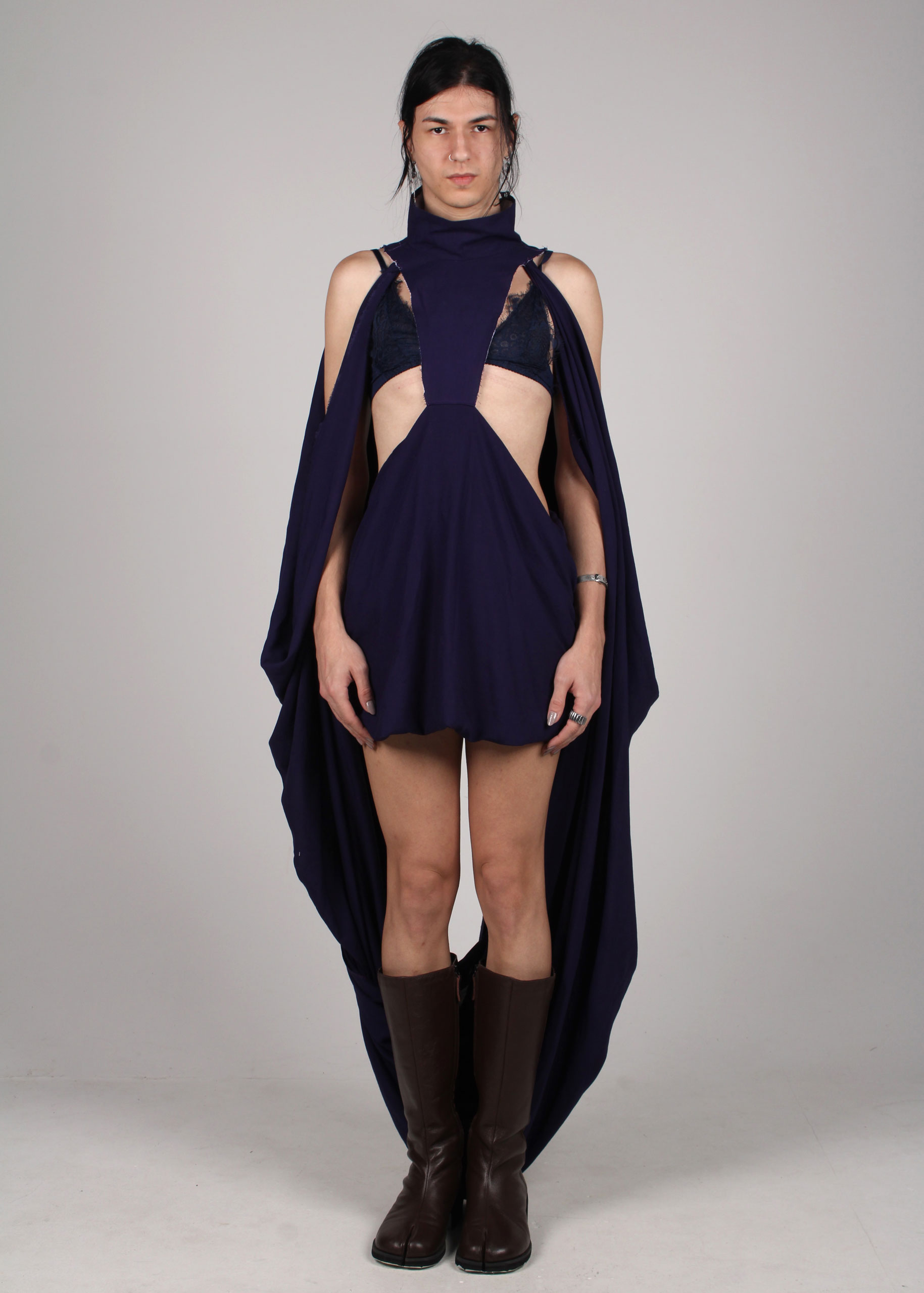
INSURRECTION

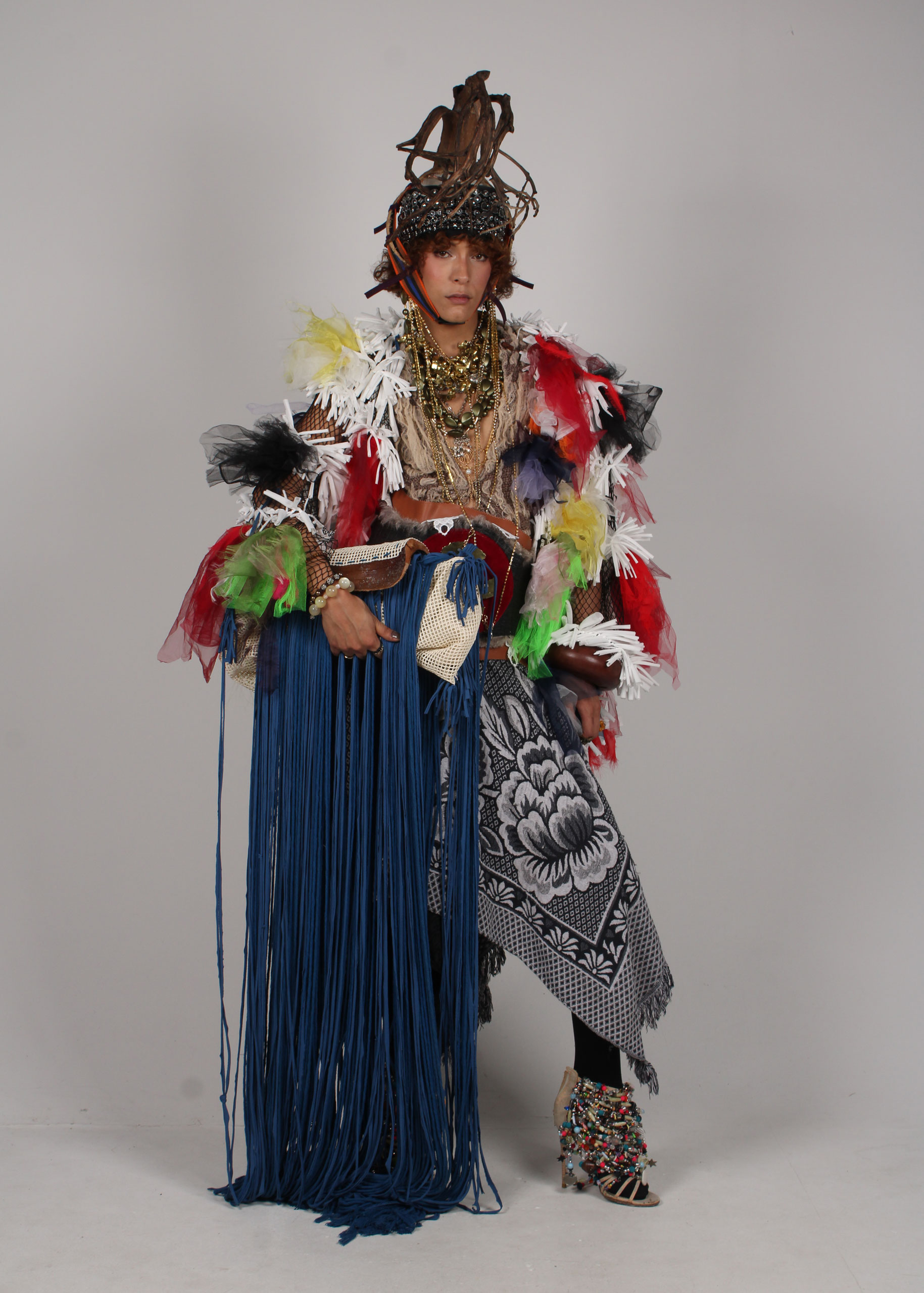
This garment was developed from the research of Colombian scientist Amanita Calderón, whose work investigates the social and political structures that make transgender women one of the populations most vulnerable to HIV and AIDS. More than a matter of individual exposure, this reality is rooted in historical systems of marginalization, exclusion, and the denial of fundamental rights.

As a response, the look reclaims narratives of resistance through the ancestral knowledge of the Muisca Indigenous people of Colombia. Inspired by the goddess Uitaca, a symbol of freedom, transformation, and the breaking of imposed norms, the concept embraces spirituality as a source of empowerment and liberation.

The project is also inspired by ballroom culture, recognizing its role as a space of visibility, community, and survival for queer and transgender people, particularly during the HIV/AIDS crisis. Through performance and self-expression, ballroom becomes another language of insurgency, where marginalized bodies transform vulnerability into power.
INSURRECTION emerges as a confrontation against systems that have historically attempted to erase transgender lives. The silhouette embodies a Muisca warrior figure while incorporating ballroom’s boldness and theatricality, transforming the body into a symbol of dignity, ancestral memory, and queer resilience.

The use of purple, pink, and gold creates a visual language of spirituality, opulence, and resistance, while the owl print, associated with Uitaca, appears as a guardian symbol of wisdom and freedom.

Through fashion, this project transforms ancestral mythology and queer cultural heritage into a contemporary political expression, honoring transgender lives as sacred bodies that carry the power to exist, resist, and transcend.

Bianca Oliveira Abreu Moura + Michel Nussenzweig

Bianca Oliveira Abreu Moura

Bianca Moura, 22 years old, is a student in the fashion design bachelor's program at Faculdade Santa Marcelina. During her academic career, she participated in projects in partnership with ICESP (São Paulo Cancer Institute) and the Winx Club competition. She’s interested in developing products that address versatility and modularity, using codes as a narrative and means for developing patterns and prints. Her latest works explore fashion as an interface between body, technology, and behavior, focusing on the dynamics of sport and hypermedia in the construction of lifestyles.

Michel Nussenzweig

Dr. Michel C. Nussenzweig is the Zanvil A. Cohn and Ralph M. Steinman Professor, Investigator of the Howard Hughes Medical Institute, and Senior Physician at The Rockefeller University. His laboratory studies the molecular mechanisms of adaptive and innate immunity, leading to innovative vaccines and new therapies against infectious diseases. A Rockefeller University alumnus, Dr. Nussenzweig earned his Ph.D. with Dr. Ralph Steinman, defining how dendritic cells initiate and regulate immune responses. His later work uncovered key mechanisms of B cell development and tolerance, showing that most new B cells are self-reactive and identifying checkpoints that prevent autoimmunity. He serves as Editor and Chair of the Journal of Experimental Medicine, Director of the Christopher H. Browne Center for Immunology, and Co-Director of the Stavros Niarchos Foundation Institute for Global Infectious Disease Research. His honors include the Robert Koch Prize and election to the U.S. National Academy of Sciences, the U.S National Academy of Medicine and the Brazilian Academy of Science.

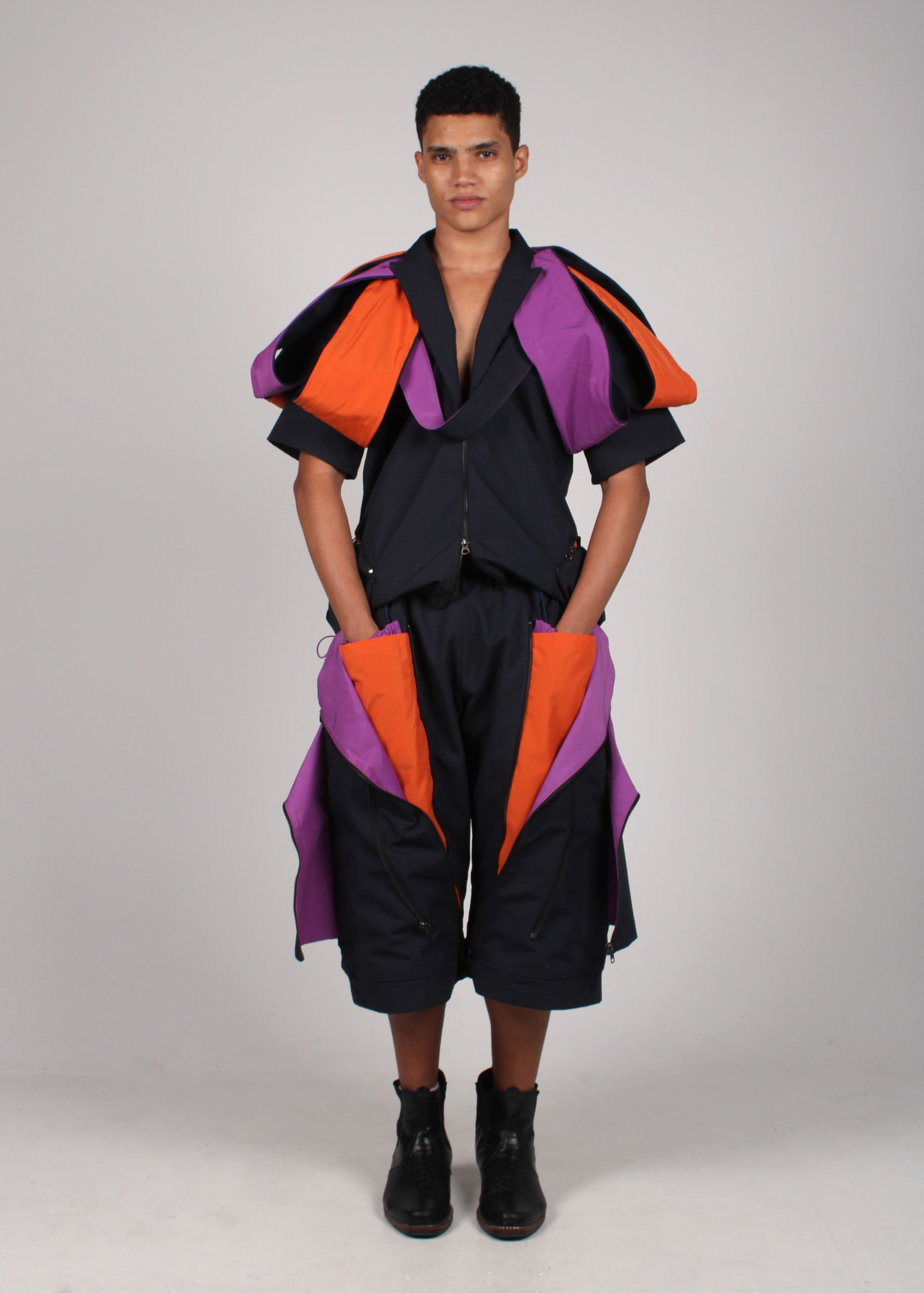
Orchis Spectrum

Developed in collaboration with scientist Michel C. Nussenzweig, the look takes as its starting point his research on broadly neutralizing antibodies (bNAbs), a rare immune response capable of neutralizing different variants of the HIV virus, important in the study of prevention and treatment. From the relationships established between these antibodies and the scientist’s hobby of cultivating orchids, a narrative emerges that brings science and nature closer together through the concepts of diversity, adaptation, resistance, and flourishing.

Inspired by Brazilian orchid species, the project visually translates the coexistence of delicacy and resilience present both in the flowers and in the immune response process studied by Nussenzweig, and with the people who live with HIV.
The diversity of flowers and their adaptability become metaphors for the constant transformation of biological systems and for the scientific advances built over time. The flowering, in turn, represents the materialization of knowledge and the prospect of new paths for the prevention and treatment of HIV. Such as the resistance and resilience of the orchids that it can be seen in those who live with HIV and persevere with the treatment and has to fight against social stigmas as well.

The look’s composition uses athletic fabrics to represent the resilience of flowers and patients living with HIV. The colors were chosen based on researched orchid species and references related to the scientist. The main piece is a jacket with removable double sleeves that unfold into colorful stripes, evoking the blossoming of flowers. Complementing the design, the shorts feature articulated front appliqués that reinforce this same idea of transformation and revelation.

Carolina Soares de Almeida Maldonado + Lloyd B. Mulenga

Carolina Soares de Almeida Maldonado

Carolina Maldonado is a Fashion Design student at Faculdade Santa Marcelina. With a strong interest in experimental processes, her research investigates the relationship between body and garment, seeking to understand how clothing can function not only as something wearable, but as an extension of the body. Throughout her academic journey, she has developed skills in sewing, pattern making, and product development. Beyond the traditional fashion field, she was one of the winners of an academic competition in partnership with the Brazilian brand Tapetah. During her graduate studies, she was also one of the founders and is currently running the student association at her college, aimed at maintaining integration among students. She is currently developing her final academic project, as well as independent work focused on contemporary fashion and design, continuously seeking to expand her knowledge and broaden her horizons.

Lloyd B. Mulenga

Lloyd B Mulenga is an internal medicine and infectious diseases physician who serves as Director of the Infectious Diseases for the Zambia Ministry of Health. He is Professor of Infectious Diseases and affiliated with the University of Zambia School of Medicine, Lusaka. He practices at the University Teaching Hospital. He serves on various international and local boards. His recent focus has been on improving health outcomes through digital health systems, including digital health information systems. His research focuses on: HIV prevention and clinical outcomes; HIV drug resistance; HIV and non-communicable diseases (kidney, cardiovascular diseases and diabetes); and infectious diseases epidemiology and clinical outcomes. He has authored several publications in peer-reviewed journals on these subjects.

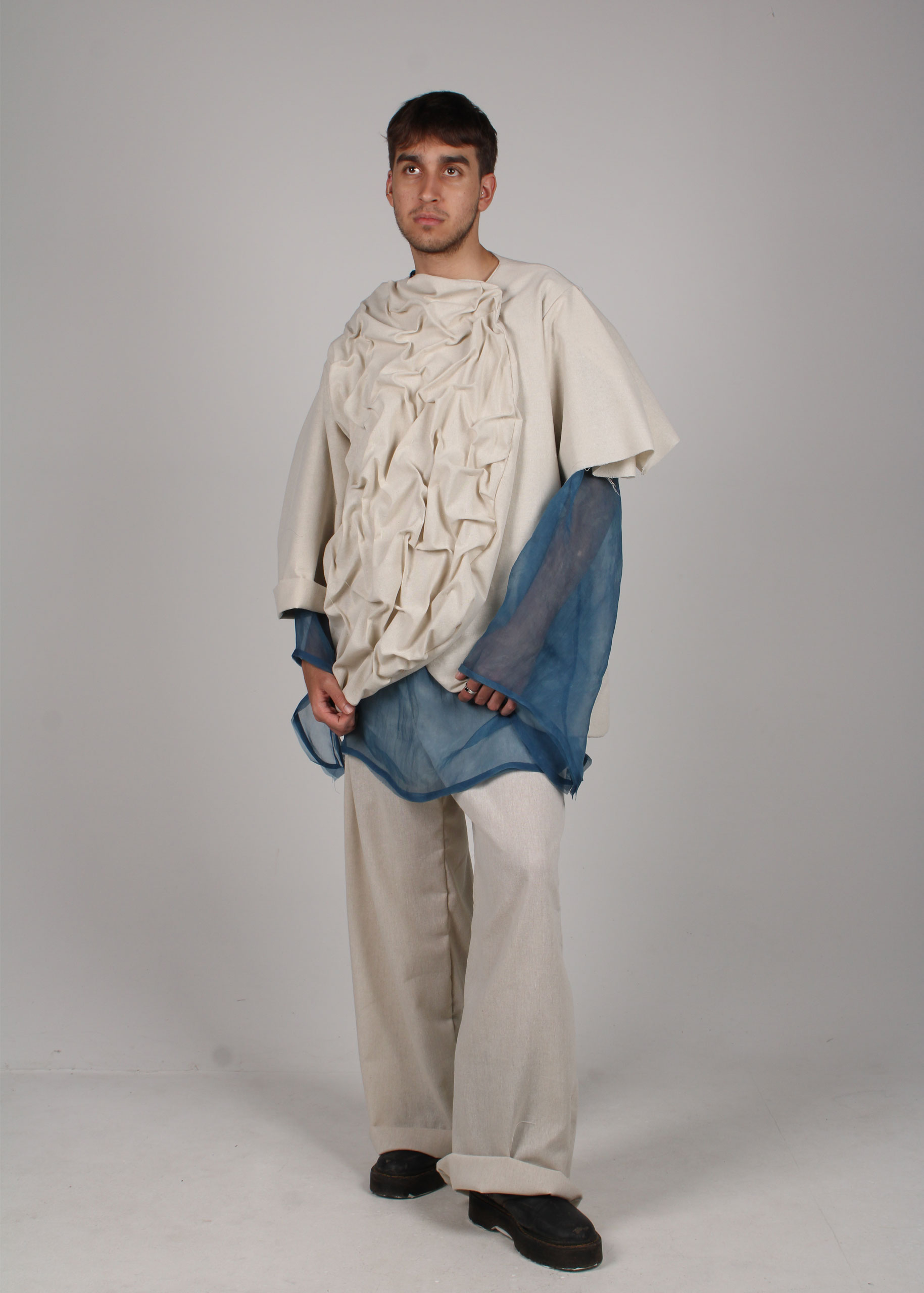
The idea behind the garment emerged from Professor Lloyd Mulenga’s research on HIV control and prevention. The intention of this garment is to symbolize union and community.

The research process began after speaking with Professor Lloyd Mulenga and learning more about his work and its key focus points. The following step was to translate these concepts into shapes, colors, and fabrics, creating a visual interpretation of the final garment.

The main concepts that inspired this look, after learning more about Professor Lloyd Mulenga’s research, were the digital connection waves derived from his work on the digital health system, as well as the importance of community and support. Some of the colors of the Zambia flag were also incorporated into the garment, creating a more personal connection with Professor Mulenga and his research.

All of these ideas were conveyed into a single look that intends to speak for itself from head to toe, resulting in a coat that incorporates fabric manipulation to represent the digital health system, as well as separated yet connected sections that symbolize community. The oversized silhouette and comfortable fabric are intended to convey comfort and support, reflecting the idea that treatment and prevention should be perceived as forms of support rather than control.

Ed Moreno + Sebastian Zagarella + James Penrose

Ed Moreno

Ed Moreno is a writer, translator, performer and HIV activist whose work combines art and advocacy, drawing on more than three decades of living with HIV. From ACT UP in the early days of the epidemic to U=U today, Moreno uses lived experience, language and culture to challenge how HIV is seen—and what its stories can become.

Sebastian Zagarella

Sebastian Zagarella is a visual artist, graduate of Sydney College of the Arts, HIV advocate and long-standing Board member of Positive Life NSW. His immersive installation Inside/Out was first exhibited as part of the 2015 Sydney Gay and Lesbian Mardi Gras Festival. It was later presented at the 2016 ASHM World STI & HIV Congress and Australasian HIV & AIDS Conference in Brisbane, and at the 2018 Melbourne Midsumma Festival, where it was accompanied by a community roundtable and formed the setting for Ed Moreno’s performance Through the Night.

James Penrose

James Penrose is a Melbourne-based fashion designer and product developer with more than a decade of experience across womenswear, garment construction and costume. A graduate of Whitehouse Institute of Design, his work has included fashion and performance costume, including award-winning costume design for Hernandez Tamayo Spanish Dance Theatre. For this collaboration, Penrose brought his fashion practice to reimagining the storied textile as a brand-new garment.

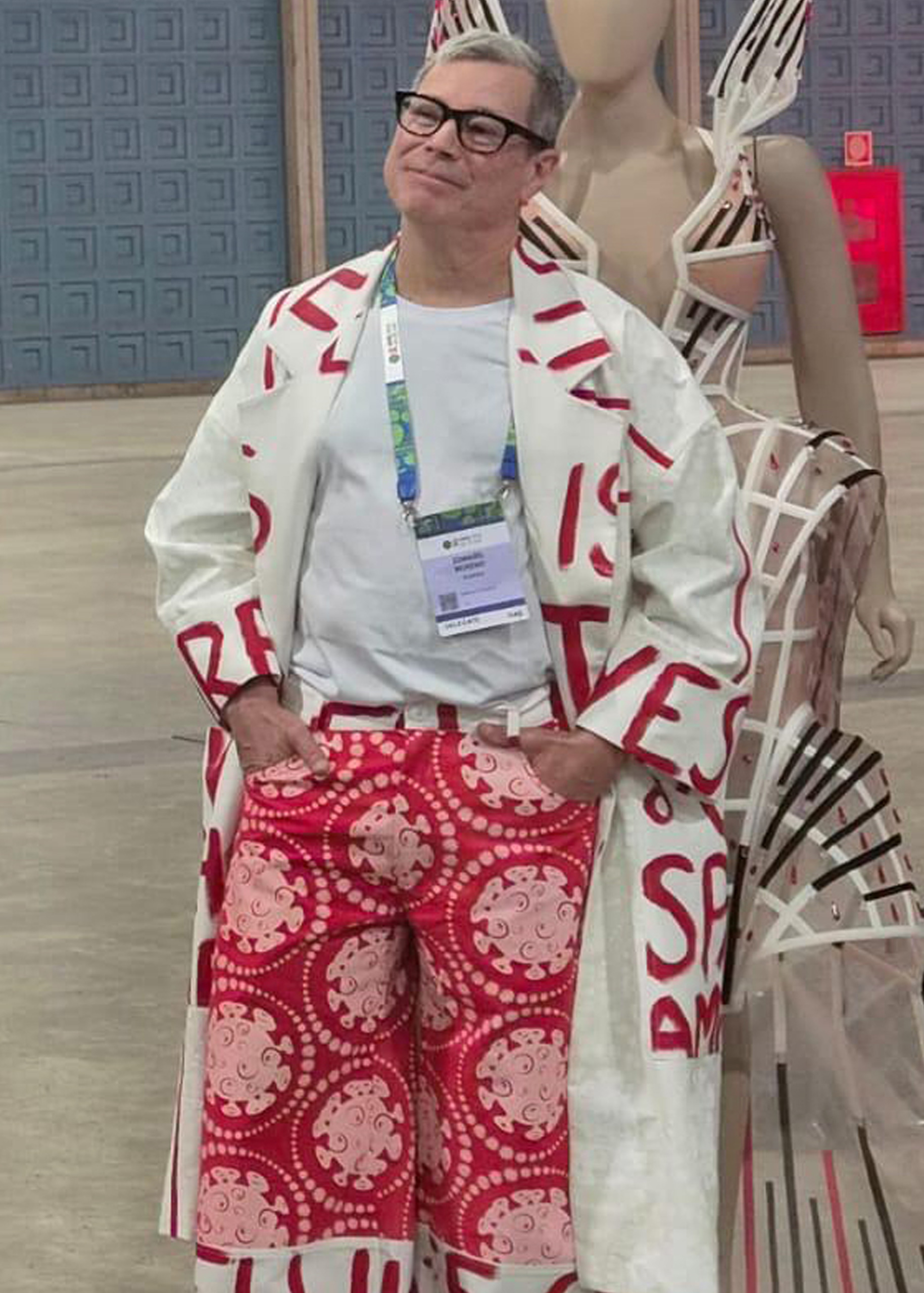
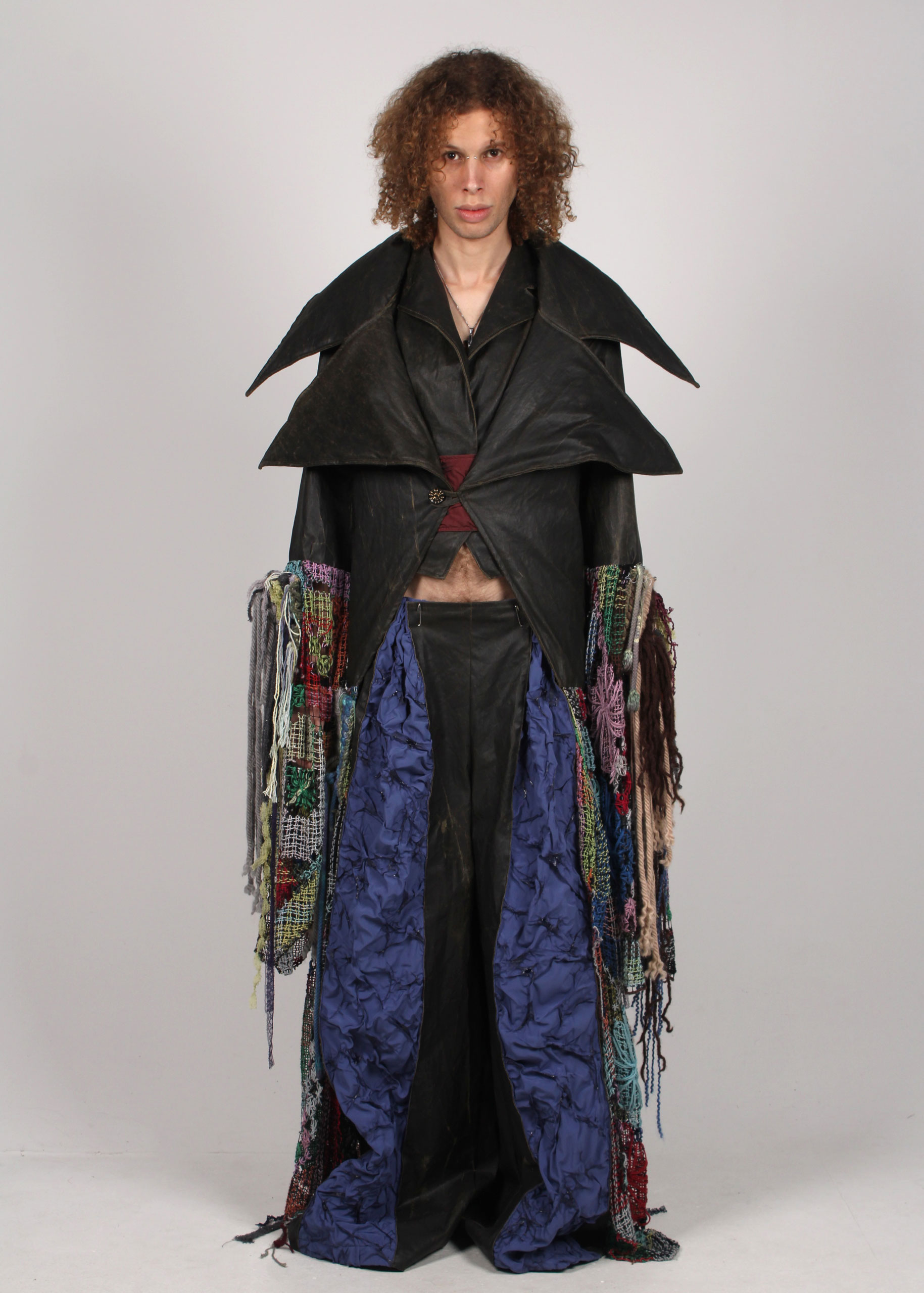
OUT OF THE LABORATORY, ONTO THE STREETS

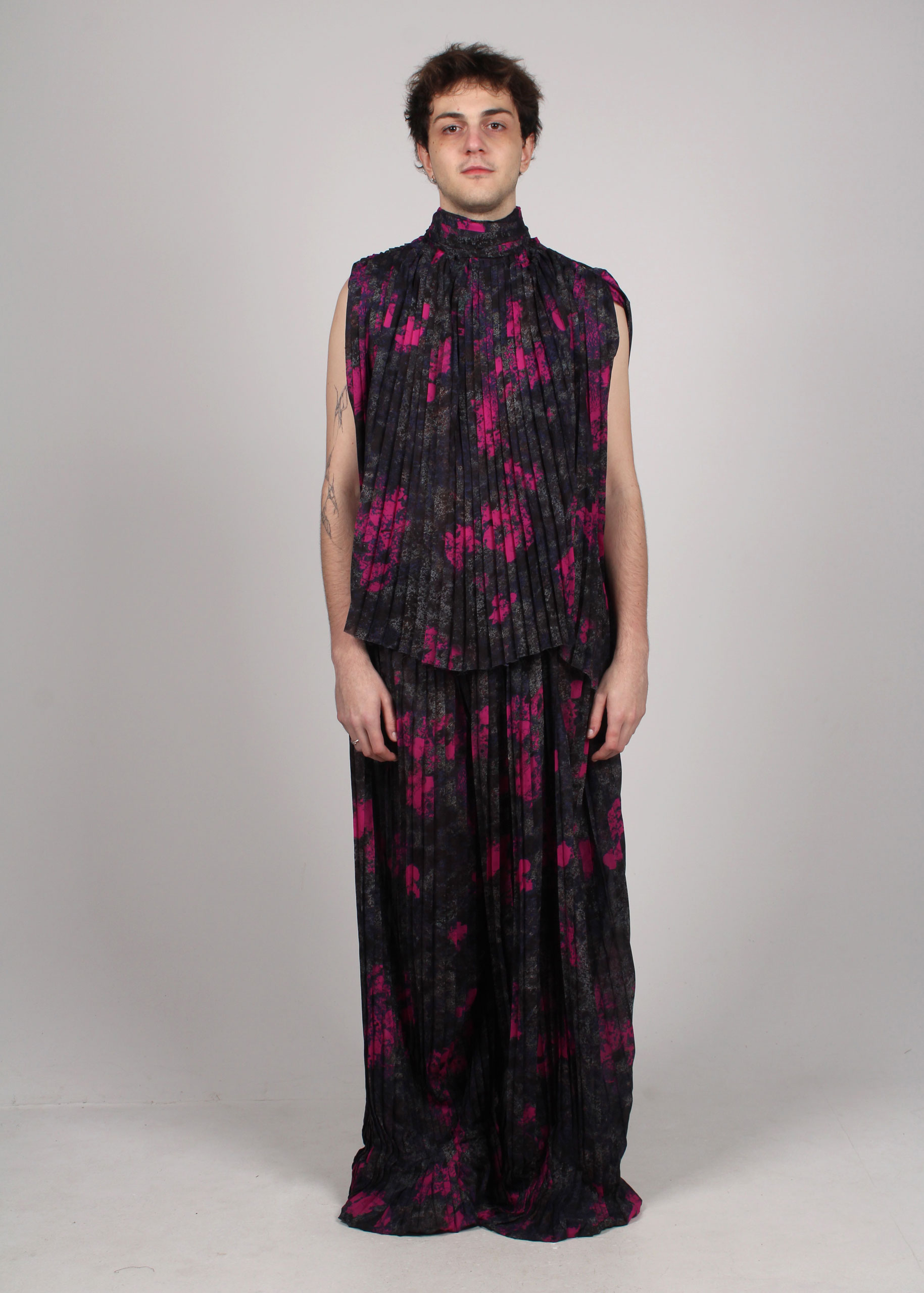
HIV has always existed in two worlds: as a biological reality inside the body, and as a social reality shaped by language, stigma and fear. This garment brings those worlds together through a material history spanning eleven years and a conceptual history reaching back to the beginnings of the AIDS crisis.

In 2015, visual artist Sebastian Zagarella presented Inside/Out, an immersive installation drawn from his lived experience of HIV. Enlarged images of the virus were incorporated into everyday objects and textiles within an intimate domestic setting, making the invisible visible and placing HIV within everyday life. The installation invited audiences to enter this world, encouraging conversation, understanding and a challenge to HIV stigma.
In 2018, Ed Moreno wrote and performed Through the Night within the installation, drawing on HIV history, his own experience and his deep connection to Brazilian writer Caio Fernando Abreu. The work imagined the epidemic as a passage through darkness—from diagnosis, fear and death—to survival, treatment and the dawn of U=U. Moreno painted words and symbols of love, sex and fear directly onto Zagarella’s virus, which he then draped across his body.

Eight years later, James Penrose transformed the same textile into an oversized, camped-up lab coat and trousers for HIV Unwrapped at AIDS 2026. Zagarella’s virus imagery remains. Moreno’s words remain. Dye, tailoring, a pink triangle, U=U and Penrose’s panache add another layer. Each intervention accumulates.

That accumulation mirrors HIV history. Effective treatment has transformed what it means to live with HIV, while Undetectable = Untransmittable means a person with an undetectable viral load cannot sexually transmit HIV. Yet stigma persists. Science does not change stigma simply by being true; its knowledge must be understood, believed and carried into everyday life.

Here, the lab coat—the uniform of medicine and scientific authority—becomes excessive, queer and public, carrying HIV’s histories out of the laboratory and onto the streets.

Gabriely Vitória Camilo Viana dos Santos + Izukanji Sikazwe

Gabriely Vitória Camilo Viana dos Santos

Gabriely Viana is a fashion student at Faculdade Santa Marcelina (São Paulo, Brazil) with an interest in projects that combine creativity, social impact, and issues of identity. She participated in the Passarela Alternativa project, which focuses on training women in detention centers, where she helped teach sewing and printmaking, contributing to their professional development and opportunities. Throughout her academic career, she has developed works that address sensitive social issues, such as paternal abandonment, maternal overload, and the complexities of racial belonging, drawing from her experience as a Black person in a white family. Her work seeks to reflect on identity, resistance, and inclusion through fashion as a critical and transformative language.

Izukanji Sikazwe

Izukanji Sikazwe is a Zambian infectious disease physician, HIV programme implementation leader and clinical researcher. A graduate of the University of Zambia School of Medicine, she further specialized through an internal medicine residency at Good Samaritan Hospital and an infectious disease fellowship at the University of Maryland. She holds a Master of Public Health from Michigan State University and is an alumna of the Africa CDC Kofi Annan Global Public Health Leadership Program. As a principal investigator for PEPFAR-funded HIV prevention, care and treatment programmes in Zambia, Izukanji spearheaded the scale up of life-saving interventions across public health facilities, transitioning direct service delivery to the Ministry of Health. Her research focuses on improving health outcomes for people living with HIV, with contributions to retention strategies, differentiated service delivery models and person-centred care that have informed global HIV guidelines. Izukanji is currently the Head of HIV at the Global Fund.

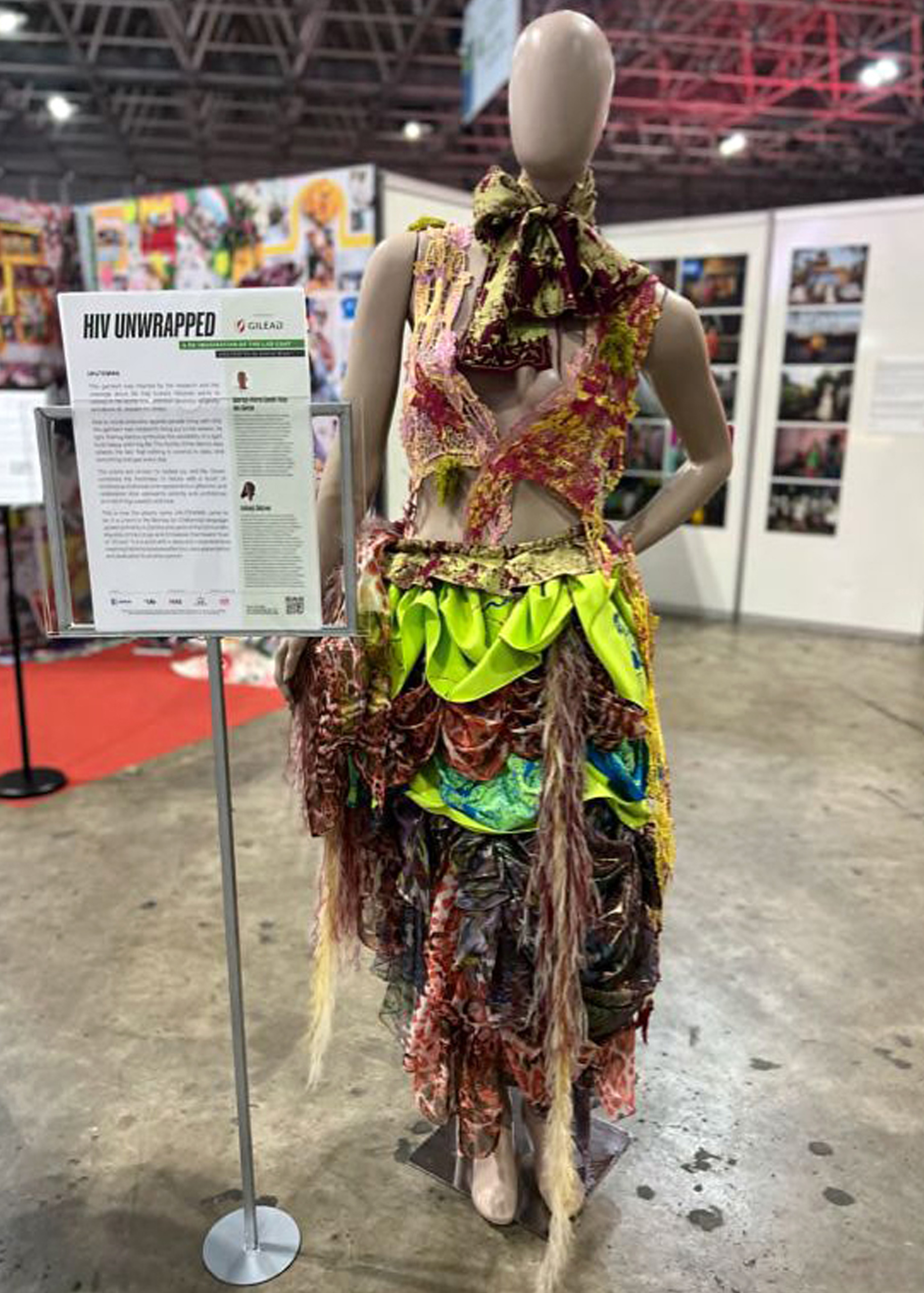
UKUTEMWA

This garment was inspired by the research and the message about life that Izukanji Sikazwe wants to convey to the world: love, affection, diversity, longevity, and above all, respect for others.

Due to social prejudice against people living with HIV, this garment was created to bring joy to the wearer; its light, flowing fabrics symbolize the possibility of a light, fluid, happy, and long life. The fluidity of the fabrics also reflects the fact that nothing in science is static and everything changes every day.

The colors are chosen to radiate joy and life. Green combines the freshness of nature with a touch of boldness and renewal; pink represents fun, affection, and celebration; blue represents serenity and confidence; and red brings passion and love.

This is how the piece’s name, UKUTEMWA, came to be. It is a term in the Bemba (or ChiBemba) language, spoken primarily in Zambia and parts of the Democratic Republic of the Congo and Zimbabwe, that means “love” or “to love.” It is a word with a deep and comprehensive meaning that encompasses affection, care, appreciation, and dedication to another person.

Giulia Yumi Settimi + Sanjay Pujari

Giulia Yumi Settimi

Giulia Yumi is a Fashion student at Faculdade Santa Marcelina (FASM). She works as a multidisciplinary artist at the intersection of Fashion and Art. Her practice is developed through manual textile processes, with an emphasis on printing and weaving, in the creation of garments and surfaces. Her work explores original contemporary languages, in dialogue with subcultures, from a non-gendered perspective. She is interested in expanding her artistic language through textile and sculptural experimentation and manipulation, with a focus on incorporating unconventional materials and forms.

Sanjay Pujari

Sanjay Pujari is a physician specializing in internal medicine and infectious diseases and serves as Founder-Director at the Institute of Infectious Diseases in Pune, India. He began working in HIV care as a medical student, establishing early awareness and counselling initiatives. He currently provides care to more than 6,000 people living with HIV. His site is part of the TREAT Asia network and the TAHOD cohort, collaborating on research, education and policy initiatives in the Asia-Pacific region. His research focuses on optimizing antiretroviral therapy, managing opportunistic infections, including tuberculosis, and evaluating effectiveness and safety of generic FDC ART. He has contributed to WHO consultations, served on the ICMR National Task Force on COVID-19, and is long-time faculty at the EACS HIV Summer School. He also conceived and produced U=Me, an award-winning short film promoting U=U and seeks to shift community attitudes to help mitigate stigma and discrimination.

The Undetectable = Untransmittable collection, developed for the Unwrapped Rio project, is inspired by the U=U principle, which states that people living with HIV who are receiving effective treatment and have an undetectable viral load do not transmit the virus through sexual contact. Drawing from this scientific framework, the collection proposes a reflection on the body, invisibility, stigma, and transformation.

The garments explore layers, volumes, and surfaces that challenge the boundaries between concealment and revelation, translating scientific knowledge into a visual and sensorial language. By bringing together fashion, art, and social discourse, the collection reaffirms the body as a site of presence, care, and empowerment, contributing to the dismantling of stigma and the promotion of greater awareness and inclusion.

Italo Gonçalves + Raphael J. Landovitz

Italo Gonçalves

Italo G. is an artist working across art, fashion, and material investigation, currently pursuing a Bachelor’s degree at Faculdade Santa Marcelina (FASM) in São Paulo. He has formal experience in art galleries and develops a practice focused on contemporary production. His work is characterized by a vanguard approach, in which experimentation plays a central role, both in the choice of materials and in the construction of visual narratives. His practice is grounded in consistent and well-founded research, articulating theoretical references with production processes that prioritize gesture as a structuring element of the work. Materiality appears as an active field of investigation, where techniques and materials are reorganized throughout the process. The poetics that run through his work stem from lived experience, memory, and personal narratives that are displaced and re-signified. His work is also built on provocations around the issues he observes, encouraging viewers to look at what is not being said — the invisible within the visible.

Raphael J. Landovitz

Raphael J. Landovitz, MD, MSc, is Professor of Medicine and Chief of the Division of Infectious Diseases at the David Geffen School of Medicine; He also serves as Director of the UCLA Center for Clinical AIDS Research & Education. He is one of the Network Chairs of the NIAID-funded HIV Prevention Trials Network. His research is focused on the optimization of the use of antiretroviral medication for both HIV treatment and HIV prevention. He leads several biomedical and behavioral prevention intervention studies and projects using Post-Exposure Prophylaxis (PEP) and Pre-Exposure Prophylaxis (PrEP) strategies for men who have sex with men and cis- and transgender women, including the clinical trials evaluating long-acting injectable cabotegravir for PrEP, which contributed to recent US FDA and global regulatory approvals.

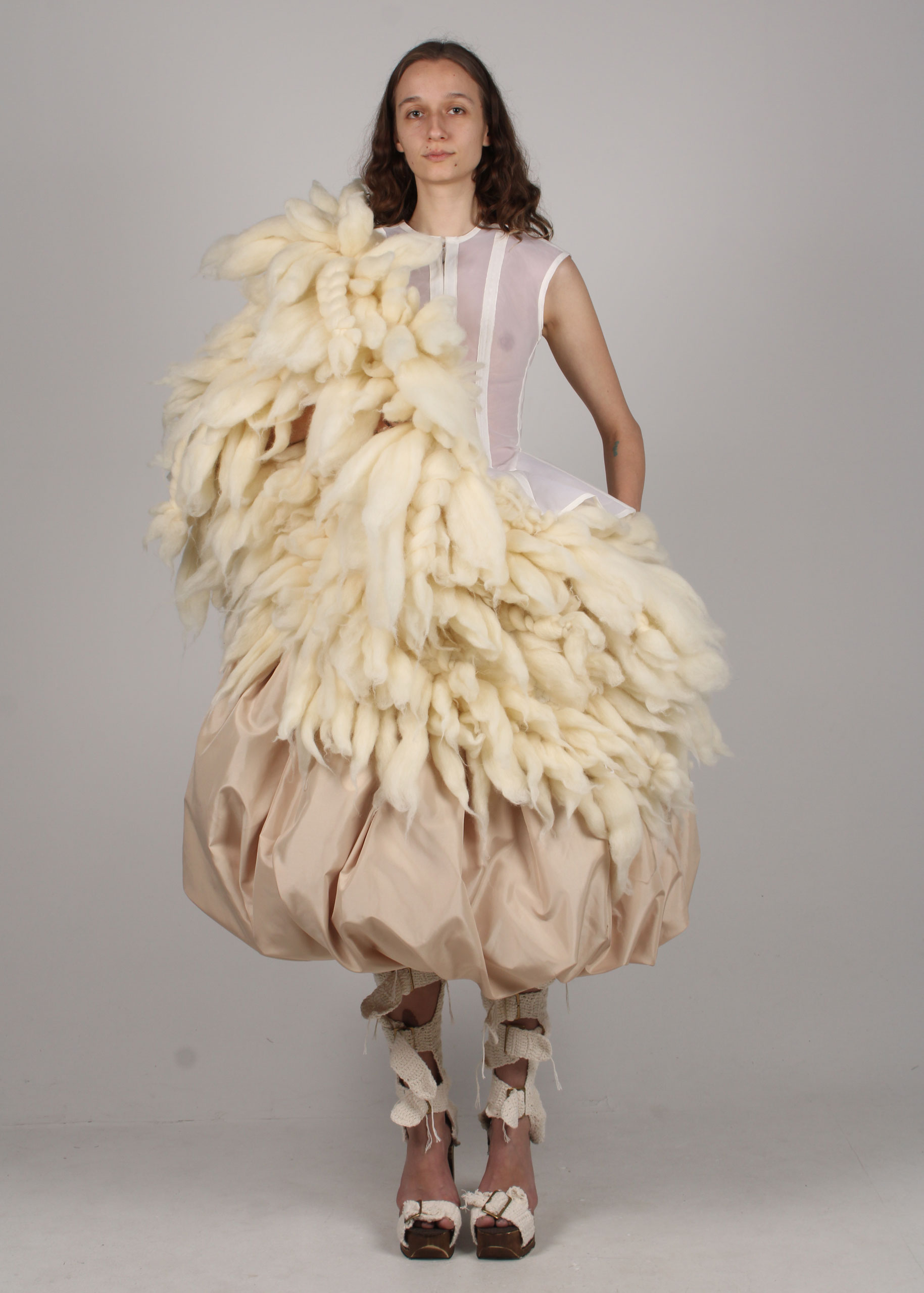
If You’re Gentle, Touch Me

If You’re Gentle, Touch Me investigates the stigma surrounding physical touch and people living with HIV, particularly the fears and misconceptions established during the 1980s and 1990s that continue to persist today. Inspired by the research of Raphael J. Landovitz, the project examines how misinformation transformed one of the most fundamental human experiences — touch — into a source of distance, suspicion, and exclusion.

In response, the garment proposes the opposite: rather than repelling, it invites. Its highly textured surface is designed to awaken curiosity and encourage tactile interaction. Developed manually using Merino wool woven on a peg loom, the material creates a dense, soft, and sensory texture that makes touch central to the experience of the piece.

The color palette ranges from white to soft yellow tones, emphasizing form and honoring the natural qualities of the material. The silhouette is defined by a voluminous rounded skirt that evokes enlarged cellular and nodular structures, as if elements normally hidden within the body had been transformed into architecture. These organic forms suggest life, growth, and transformation.

As a statement against stigma, If You’re Gentle, Touch Me invites viewers to reconsider their relationship with touch, proximity, and difference. The garment is not about contamination, but connection; not about isolation, but presence. Through fashion, touch becomes an act of recognition, empathy, and resistance.

Marcella Alves Bezerra + Lishomwa (Lish) Ndhlovu

Marcella Alves Bezerra

I’m Marcella Bezerra, a fashion student, and I develop my work through the construction of narratives as a means of investigating human subjectivity. My interest is centered on themes such as memory, identity, and belonging, especially in the tensions between intimacy, strangeness, and the sensitive elaboration of experience. From these questions, I seek to build visual narratives with an authorial language, in which aesthetics and concept operate inseparably. I understand fashion not only as an expression of appearance, but as a creative research device, capable of materializing affects, formulating questions, and giving shape to what often remains in the realm of the unspeakable.

Lishomwa (Lish) Ndhlovu

Lish Ndhlovu is the Herbert J. and Ann L. Siegel Distinguished Professor of Medicine at Weill Cornell Medicine. He researches HIV and ageing and pioneering strategies to prevent, slow or eliminate complications associated with HIV. Combining immunology, virology and epigenetic methods, he explores molecular mechanisms of HIV pathogenesis and persistence. He co-leads the Martin Delaney Collaboratories for HIV Cure Research, specifically, the HOPE Collabatory, and received an NIH MERIT award for his research on stem cell transplantation leading to HIV cure. He leads the NIDA-funded Weill Cornell-SCORCH consortium, documenting single-cell substance use disorder responses in the brain in the setting of HIV. He is a member of the NIAID Office of AIDS Research Advisory Committee and Co-Editor in Chief of AIDS Research and Human Retroviruses. He was elected as a Fellow of the American Academy of Microbiology in 2021 and a member of the American Association of Physicians in 2025.


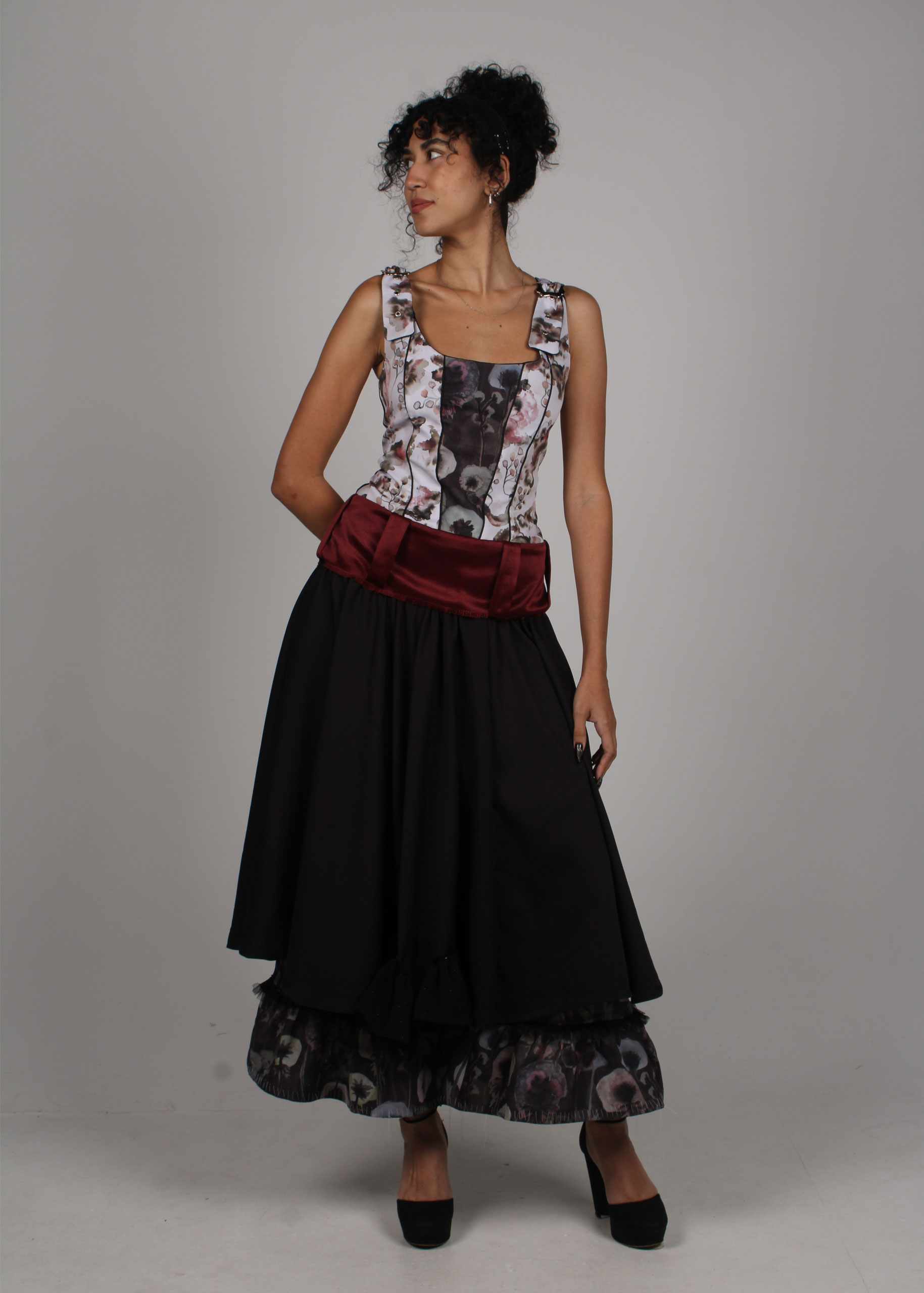
While exploring aging in people living with HIV through the research of Dr. Lishomwa Ndhlovu, I found in nature a way of understanding the body as a living organism in constant transformation. Trees, roots, and seasonal cycles became starting points for reflecting on the relationship between time, adaptation, and permanence. Just as nature responds to the conditions around it, the body is also shaped by visible and invisible processes that influence its experience throughout life.

The garment translates this relationship through translucent fabrics, materials of varying densities, and organic surfaces that evoke growth, adaptation, and continuous transformation. Embroidery, tactile textures, and prints inspired by microscopic imagery reveal what exists beyond immediate perception, creating a connection between the body’s internal processes and forms found in nature.

Rather than representing a medical condition, the piece offers a reflection on humanity, on bodies that change, adapt, and continue to exist. Like roots that remain beneath the surface or flowers that return with each season, it celebrates the capacity for transformation that accompanies all forms of life.

Wesley Corrêa Guedess + Immaculate Owomugisha Bazare

Wesley Corrêa Guedess

Wesley Guedes holds a Bachelor’s degree in Fashion from Faculdade Santa Marcelina, in 2025. He also holds a Bachelor’s degree in Nautical Sciences from EFOMM and is a Ship Captain. He is an investor-partner at Grupo Lolja and the founder of the brand Fábrica 80, as well as the creator of Fio Denim — an original material developed from the reuse of waste from the denim industry. In 2024, he participated in the exhibition “60 Years of Fashion in Brazil” at the Museu da Casa do Objeto Brasileiro. In 2025, he joined the CRIE Moda Autoral program and stood out at the FASM Fashion Forum with his graduation collection, “Children of Chaos”. He is currently pursuing postgraduate studies in Fashion Business at FAAP and in Fashion Creation and Styling at Senac São Paulo.

Immaculate Owomugisha Bazare

Immaculate Owomugisha Bazare is a Ugandan social justice lawyer. She is the Executive Director of the CWJU, leading strategic litigation, advocacy and movement building to advance HIV justice, SRHR and the rights of women, girls and key populations. She serves on multiple regional and global governance bodies, including the Uganda Country Coordinating Mechanism for the Global Fund, the International Community of Women Living with HIV, the HIV Justice Network, the AIDS Rights Alliance of Southern Africa, and the Board of Trustees of the Uganda Key Populations Consortium. She is a member of a range of other bodies, including the UNAIDS HIV and Human Rights Reference Group, the WHO Global Validation Advisory Committee, the Unitaid Communities Delegation, and the Uganda AIDS Commission Technical Working Group on Stigma and Discrimination. Immaculate has led and contributed to precedent-setting litigation in Uganda, challenging HIV criminalization, stigma, discrimination and gender-based violence.

The concept for this look emerged from research into the HIV/AIDS epidemic during the 1980s and the stories of individuals who challenged silence and stigma. During this process, I discovered Philly Lutaaya, one of the first Ugandans to publicly disclose his HIV diagnosis in 1989.

At a time when fear and prejudice were widespread, he used his voice to promote awareness, compassion, and dignity. Reflecting on his legacy led me to a simple but powerful idea: despite our differences, we all share the same heart, the same blood, and the same right to care, respect, and humanity.

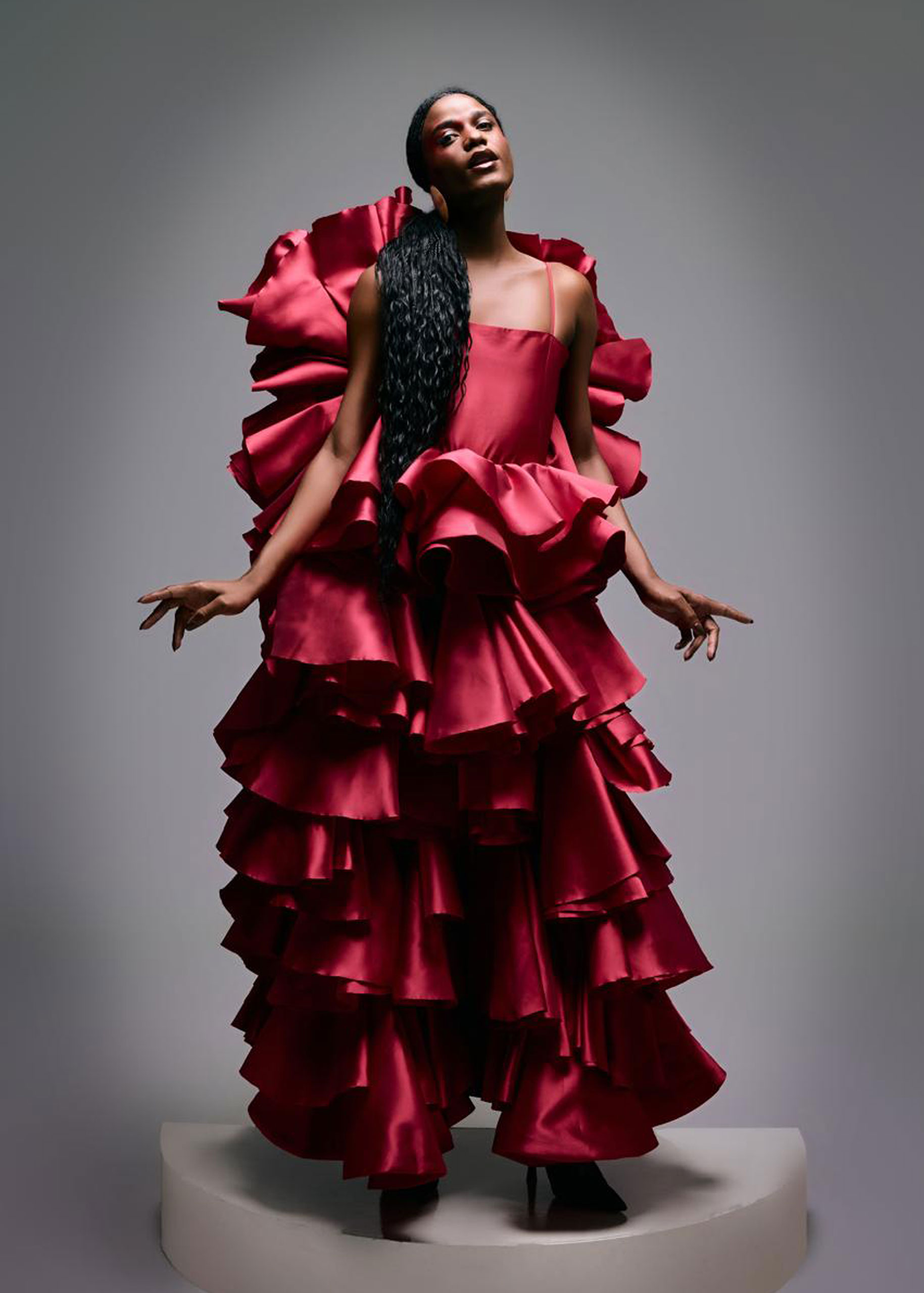
This concept is translated into a sculptural red silk taffeta dress, where the heart becomes the central symbol. The dramatic volume and cascading layers of ruffles represent strength, visibility, and resilience, while the structured back resembles protective armor, shielding the body from stigma and discrimination. The garment transforms vulnerability into empowerment, honoring those who have used courage and visibility as tools for social change.

Will O Criativo + Báltica Cabieses

Will O Criativo

Will O Criativo is a 25-year-old creative raised in the outskirts of São Paulo, Brazil. He holds a degree in Business Administration and is currently a fashion student at Faculdade Santa Marcelina. His work focuses on upcycling and material reuse, combining management knowledge with creative practice. He is part of the Brother’s influencer team and has won 1st place in the São Paulo Inclusive Fashion Competition and 2nd place in the Mato Grosso do Sul edition. His creations have been showcased at the São Paulo Waste Biennial and exhibited in museums, theaters, and industry events such as Artesanal Fashion Day, the Focus Fashion Summit (in collaboration with Pernambucanas), and Future Print.

Báltica Cabieses

Báltica Cabieses is Professor of Social Epidemiology at Universidad del Desarrollo in Chile. She is a nurse-midwife with a Master’s in epidemiology and a PhD in health sciences. Báltica has been a senior visiting scholar at the University of York since 2011. She is a co-founder, former co-leader and board member of the Lancet Migration Latin American hub and founder of the Chilean research network on health and migration, RECHISAM. Báltica was the Director of the WHO/PAHO Collaborating Centre on Capacity Building for the Health of Migrants and Refugees in Chile from 2024 to 2028. She consults for organizations such as WHO and PAHO on health equity, health of migrants, implementation science research and action in diverse communities. Báltica serves on the Board of the International Network for Research on Inequalities in Chile Health. She has edited 10 academic books and participated in over 70 research projects in Chile and abroad.

APÁTRIDA

APÁTRIDA is a conceptual look developed through research into the corporealities of LGBTQIAPN+ youth, Mapuche Indigenous peoples, and migrant populations crossing the Atacama Desert in search of refuge, humanitarian assistance, and access to healthcare. The project is grounded in a reflection on the body as a territory in constant displacement, shaped by physical, social, and symbolic borders.

The work explores concepts such as nomadism, protection, freedom, inhabiting the body, destiny, and journey. Based on this investigation, traditional Latin American garments were analyzed, particularly the ponchos worn by Indigenous communities, whose generous, gender-neutral construction provides shelter and comfort to the body. From this observation emerged a proposal for a modular, genderless garment built from geometric forms and inspired by the traditions of Latin American weaving. The materials used consist of reclaimed fabrics and textile remnants, referencing the vast amounts of textile waste discarded in the Atacama Desert. The narrative imagines a traveler who, throughout their journey, collects textile fragments and weaves them onto their own body as a survival strategy against the harsh desert conditions, creating a kind of portable cocoon.

The color palette draws inspiration from Indigenous cultures of Chile and Brazil, combining genipapo black, limestone white, coffee brown, tones found throughout the desert landscape, and annatto red. Visually inspired by the aesthetic freedom of Elke Maravilha, the look establishes a dialogue between science, fashion, and human rights, transforming clothing into a symbol of resistance, belonging, and care for life.

Yasmin da Luz Ferreira Pinto + Sandhya (Sandy) Vasan

Yasmin da Luz Ferreira Pinto

Yasmin da Luz is a Fashion Design student at Faculdade Santa Marcelina, currently in her final year of undergraduate studies. Throughout her academic journey, she has developed an interest in authorial processes and in building narratives through clothing, seeking experiences in the market that expand her repertoire and perspective. Her work stems from the observation of memories, emotions, and social contexts, understanding fashion as a form of language. She believes in dressing as a sensitive means of communication, capable of reflecting contemporary issues and creating space for diverse perspectives, while exploring paths that engage with responsibility and intention in the creative process.

Sandhya (Sandy) Vasan

Sandhya Vasan is Vice President of Global Infectious Diseases Research at the Henry M. Jackson Foundation for the Advancement of Military Medicine, leading this component of the U.S. Military HIV Research Program and Viral Diseases Program at the Walter Reed Army Institute of Research. Sandhya studied mechanical engineering at the Massachusetts Institute of Technology and completed her MD at the Harvard-MIT Division of Health Sciences and Technology at Harvard Medical School and a residency in paediatrics at Johns Hopkins University. Sandhya worked at the Communicable Disease Centre and National University of Singapore and conducted research on HIV vaccines, therapies and adjuvants at the Aaron Diamond AIDS Research Center and The Rockefeller University in New York. She leads an array of basic and clinical studies, oversees staff at clinical research sites in Africa, the Middle East and Asia, and is the principal investigator on grant awards from the U.S. Department of Defense and NIH.

The structure and development of this look are grounded in the research conducted by Sandhya Vasan, Vice President of Global Infectious Disease Research. As the leader of the U.S. Military HIV Research Program and the Viral Diseases Research Program at the Walter Reed Army Institute of Research, her scientific work serves as both the foundation and the starting point for the visual and conceptual narrative of this design.

The look translates this research through the development of a printed jumpsuit layered beneath a blazer and complemented by a conceptual belt. The blazer’s aesthetic is directly inspired by the laboratory coat, establishing an immediate visual connection to protection, scientific investigation, and the laboratory environment in which Dr. Vasan conducts her work. In contrast, the jumpsuit illustrates the biological behavior of the virus, representing the way HIV enters, inhabits, and integrates itself into the human body. The print functions as a visual translation of this process of invasion and permanence, making a direct reference to the fusion between HIV and the genetic material of human cells.

Finally, the belt assumes the role of intervention and healing. Far from being a mere accessory, it becomes a key element within the garment’s narrative. Its design references the cutting-edge technology behind mRNA vaccines, one of the most promising frontiers of modern medicine championed by leading global research institutions symbolizing active protection and the ongoing fight against the virus.