
British HIV Association Conference 2026, Liverpool, UK British HIV Association Conference 2026, Liverpool, UK

HIV Unwrapped is a joint project between Positive East, the Australasian Society for HIV, Viral Hepatitis and Sexual Health Medicine (ASHM), and fashion designer Patrick McDowell to help illustrate how science, fashion, and HIV activism intersect.

From the HIV pandemic’s origins in the early 1980s to the present day, art emerges as a powerful tool, fostering empathy, challenging misconceptions, and amplifying the voices of those living with HIV.

Fashion has played a significant role in this, advancing HIV awareness by translating activism into a visible, cultural language that evokes an emotive response which reaches beyond traditional health messaging. From activist T-shirts and initiatives like the red ribbon, fashion and design have helped promote and normalise conversations around HIV. By placing HIV narratives on runways, garments, and in popular media, fashion has helped make political statements personal, using creativity to express solidarity, loss and to advocate for equitable access to prevention and treatment for all.

HIV Unwrapped seeks to explore this historic intersection of HIV, fashion, and scientific development. Using the lab coat as a premise, the project draws inspiration from the question – what would you wear as an HIV scientist/researcher that amplifies yourself and your work in HIV?

In February 2026, the project brought together five fashion students and recent graduates with five UK-based HIV scientists and researchers. Through this collaboration, the designers developed five distinct concepts that reimagined, redesigned and redefined the traditional lab coat, drawing directly on the scientists’ work and areas of expertise within HIV research. The designers were encouraged to challenge and explore ideas of HIV science through their own artistic language, perspectives and aesthetic approaches.


Project promotional image generated with AI
All images of the garments on this page are TEMPORARY ONLY. The final photos of the garments will be available in September.
All biographies reflect the time of the exhibition, please follow their social media links to see their latest work.

Kyle Ho + Professor Kevin Fenton

Kyle Ho

Kyle Ho is a menswear designer committed to redefining a field often shaped by tradition and convention. He specialises in progressive bespoke tailoring, drawing on an unconventional perspective to challenge established norms and offer a more distinctive approach to men’s dress. His design philosophy centres on subverting expectations and uncovering the extraordinary within the everyday. His work is defined by high-fashion silhouettes and exaggerated proportions, balanced with considered attention to detail. He places equal emphasis on craftsmanship and the careful sourcing of materials, ensuring each piece reflects both quality and innovation. While visually striking, his garments remain grounded in functionality and wearability. Through his practice, Kyle Ho questions traditional notions of masculinity and explores new ways of expressing and reshaping the male form.

Professor Kevin Fenton

Professor Fenton is the Regional Director for London in the Office for Health Improvement and Disparities, the Statutory Health Advisor to the Mayor of London and the Greater London Authority, and the Regional Director of Public Health for NHS London. He is a senior public health expert and infectious disease epidemiologist who has worked in a variety of public health executive leadership roles across government and academia in the UK and internationally, including taking a leading role in London’s response to the COVID-19 pandemic. In December 2021, he was appointed Chief Advisor on HIV to the UK Government and Chair of the HIV Action Plan Implementation Steering Group, overseeing delivery of England’s national HIV strategy.

Professor Fenton was President of the UK Faculty of Public Health (2022–2025) and President of the British Science Association (2024–2025). He was awarded a CBE in the 2022 New Year Honours List for services to public health.

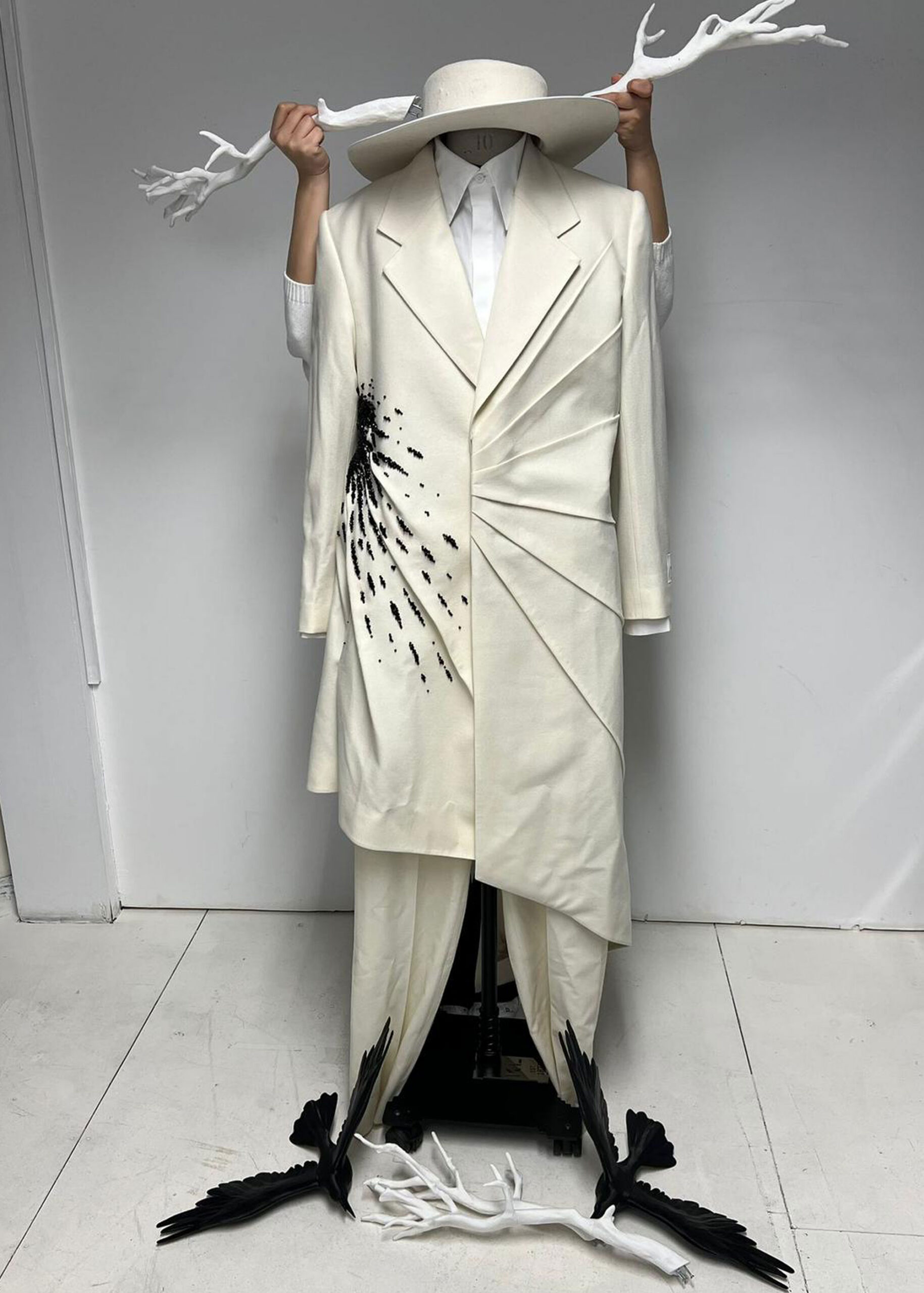
This look reinterprets traditional wedding attire through a lens of equity, inspired by the public health principles of Kevin Fenton. The ivory suit references established visual codes of marriage, purity, commitment, and social recognition, while simultaneously challenging their exclusivity. The black markings that disrupt the garment’s surface signify HIV-related stigma and broader structural inequalities that have historically limited access to love, visibility, and legitimacy for marginalised communities.

The lace veil reconfigures a conventional bridal element into a symbol of both concealment and humanity. It reflects the silence and fear often associated with HIV, while its delicacy emphasises vulnerability and the presence of the individual beyond imposed labels.

The presence of ravens introduces a dual narrative of foreboding and transformation. Traditionally associated with death, they allude to the historical fear and loss surrounding HIV. Here, they are repositioned as symbols of resilience, intelligence, and transition, suggesting the possibility of change through honesty and collective action. They reinforce the importance of confronting difficult truths.

As a wedding look, the piece asserts that love and partnership are fundamental rights, advocating for a future where intimacy is not constrained by stigma and where justice and inclusion shape how love is recognised and celebrated.

Maximilian Raynor + Professor Chloe Orkin

Maximilian Raynor

Maximilian Raynor is a British fashion designer and graduate of Central Saint Martins, who debuted at London Fashion Week in 2024 and quickly gained recognition for his theatrical, storytelling-driven collections, as well as his use of circular, up-cycled materials. Raynor has dressed a growing list of high-profile celebrities, including Lady Gaga, Chappell Roan, Rita Ora, Amelia Dimoldenberg, Teyana Taylor, and Ashley Graham, helping establish his reputation among pop culture’s most visible figures. His rising influence has been recognised through industry accolades, including magazine covers with Perfect and Glamour, editorial features in Dazed, Wonderland + Hunger magazine and various awards ranging from the ITS Contest Italy to Drapers 30 Under 30 and Attitude 101 Queer Trailblazers.

Professor Chloe Orkin

Chloe is Professor of Infection and Inequities, Director of the SHARE Research Collaborative for health equity and Dean for Healthcare Transformation at Queen Mary University of London. Her clinical practice is at Barts Health NHS Trust. She was awarded a Member of the Order of the British Empire for service to the National Health Service. She focuses on long-acting HIV treatment, mpox and equitable inclusion in research. Leadership roles: clinical advisor to WHO Europe for Mpox (2022-23), Chair of the British HIV Association (2016-19), Medical Women's Federation President (2021-23), IAS Governing Council (2020-24).

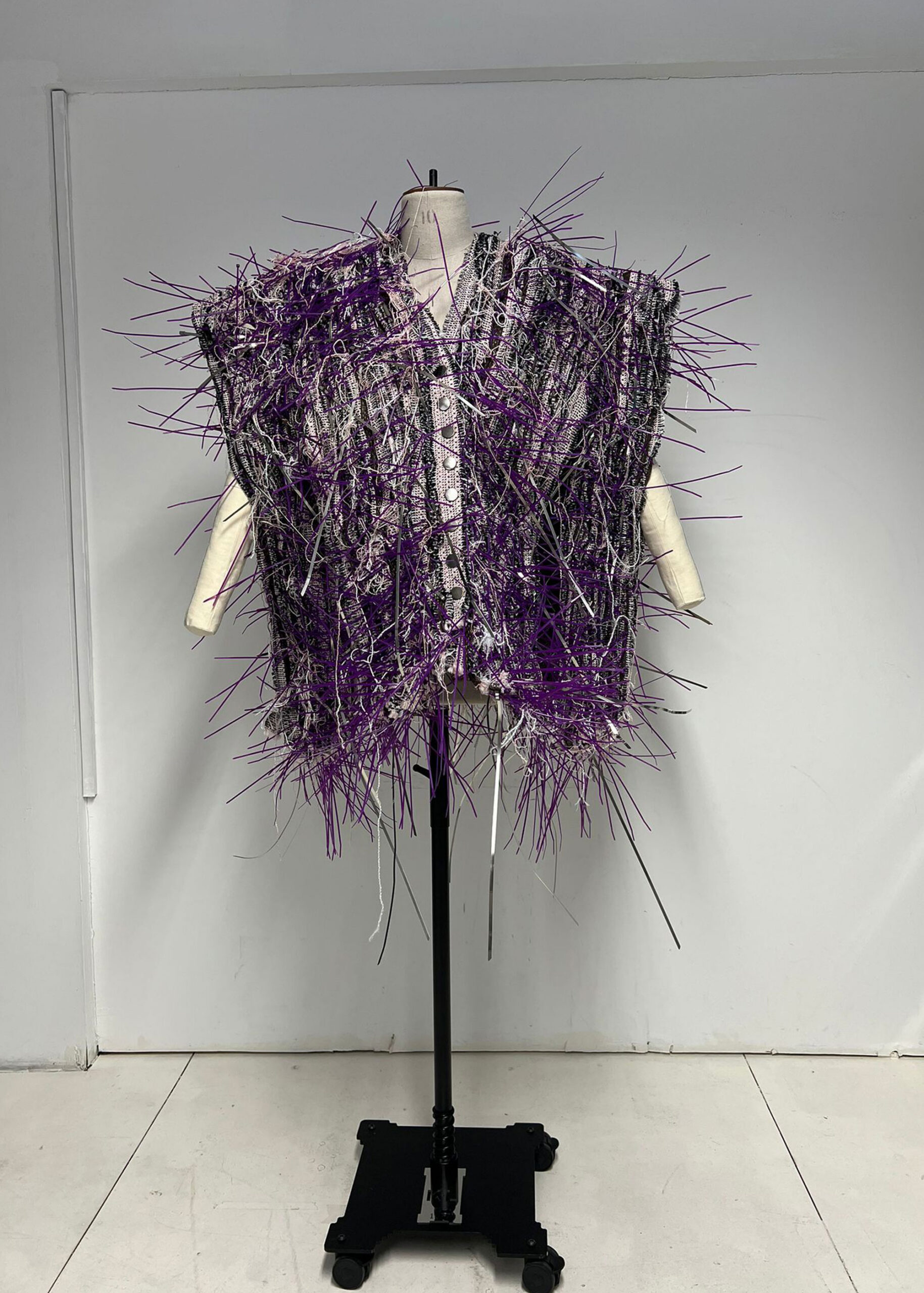
Drawing on Orkin’s pioneering work in long-acting injectable HIV treatments and her outspoken, activist-driven approach to healthcare, I have translated her impact into a bold, conceptual garment.

Central to the design is the colour purple, a direct homage to Orkin’s iconic hair and her embrace of visibility, individuality, and pride. The jacket embodies her vibrant personality while symbolising the fusion of science and identity. I have incorporated sharp, spiked embellishments across the piece, referencing the physicality of injectable treatments- each point representing both the clinical reality of HIV care and the breakthroughs Orkin has helped bring to patients worldwide.

The collaboration reflects a shared ethos of disruption and progress. Orkin challenges stigma and transforms public understanding of HIV, while I work to redefine fashion as a platform for storytelling and social commentary. Together, they create a piece that is not only visually striking but deeply symbolic- merging activism, medicine, and design into a single narrative that celebrates resilience, innovation, and unapologetic self-expression.

SHIN + Professor Jane Anderson CBE, MBBS, PhD, FRCP

SHIN

SHIN is a London-based fashion print and design practitioner studying Fashion Print at Central Saint Martins. Their practice is rooted in lived experience, emotional honesty, and a desire to translate complex feelings into visual language through fashion, working across print, textiles, and garment form. Through drawing, research, draping, and material experimentation, SHIN develops work that brings personal and social experience into material form without reducing it to a single meaning. Rather than treating print as decoration, they approach it as a narrative and material language, allowing different meanings to coexist. Sustainability is central to the practice through upcycling, reuse, and thoughtful material choices. SHIN creates work that is emotionally honest and materially considered, with the hope that shared feeling can create connection.

Professor Jane Anderson CBE, MBBS, PhD, FRCP

Jane Anderson is a Consultant Physician and Clinical Researcher in HIV Medicine at Homerton Healthcare NHS Foundation Trust, Barts Health, UCL, and Queen Mary University of London. She has been involved in the field of HIV since the 1980s, working to secure the best possible joined-up, equitable, person-centred care for everyone living with and affected by HIV. Jane is past Chair of the British HIV Association, past Chair of the National AIDS Trust, and Co-chair of London’s HIV Fast-Track Cities Leadership Group. Jane is an advocate for creative health, having served as Chair of Paintings in Hospitals and as a Trustee for the Chelsea Physic Garden.

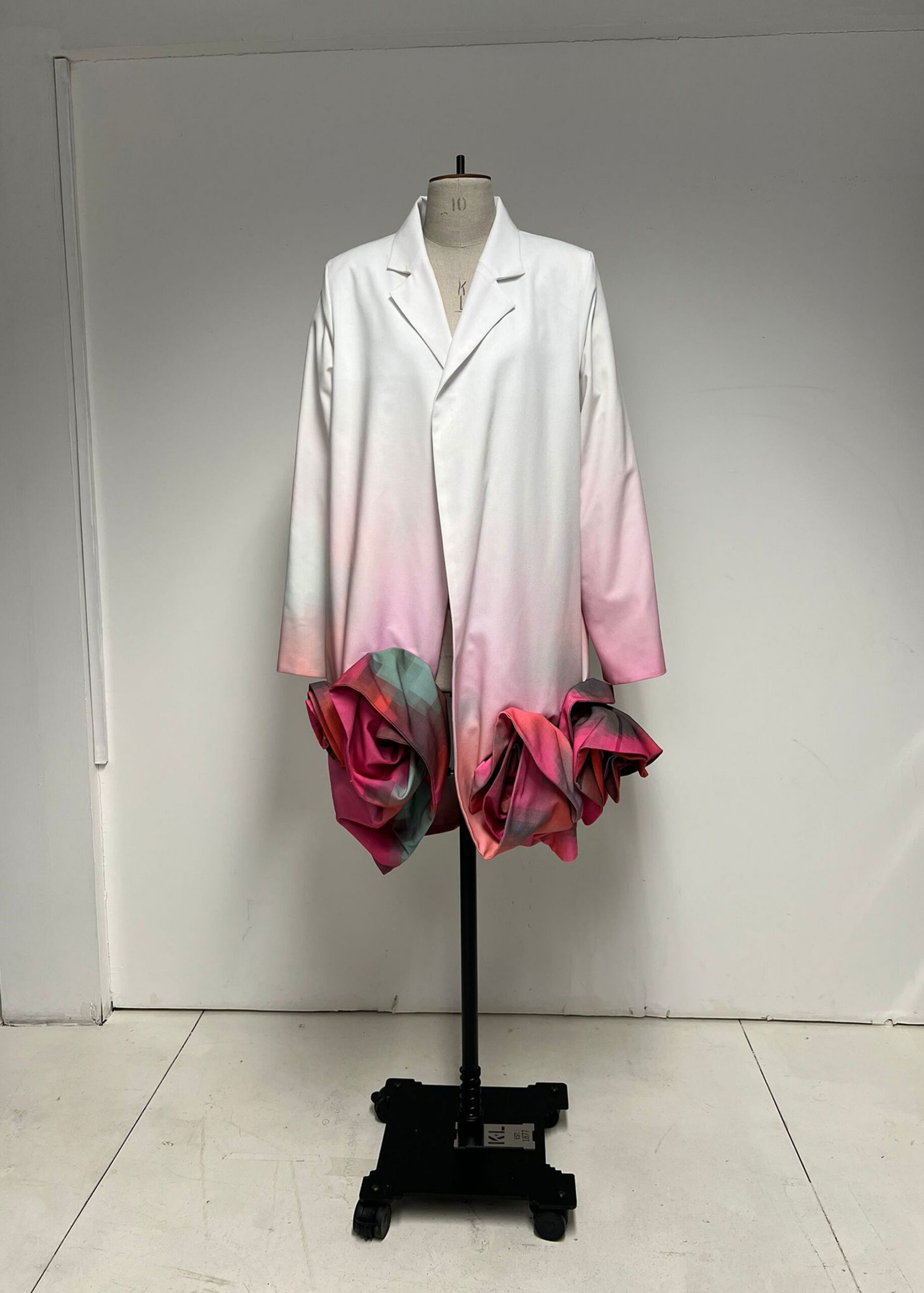
This piece was developed in response to my conversation with Dr Jane Anderson. There were many aspects of her that could have been reflected in the work, but the first starting point came from my initial impression of her: someone whose presence felt gentle, yet whose career revealed strength, persistence, and resilience. I wanted the garment to hold these contrasting qualities.

The upper silhouette expresses the evidence-based and scientific aspect of her work through a straight shape and exaggerated, thick shoulder pads. The lower section was informed by the image of Sisyphus, which came to mind after she described some achievements as feeling like pushing a rock uphill. This was reflected in the heavy, draped hemline and its abstract, flower-like form.

The print motif was inspired by the St Helena Ebony, an endangered plant at Chelsea Physic Garden, where Dr Anderson is a trustee. I translated it into a pixelated visual language to reflect her evidence-based approach. The flower became a symbol of inclusive Londoners, the people affected by her work, and the achievements and growth that emerge through sustained effort. The colour palette extended this idea through an expanded red spectrum with complementary green.

Both the outer fabric and the self double-layered construction were made entirely from upcycled tablecloths, reflecting a continuity between her earlier study of nutrition and the values and attitudes that still shape her work today.

Sophia Du + Rebecca Wilkins

Sophia Du

Sophia Du is a Canadian womenswear designer currently studying at Central Saint Martins. Her work is centered around interpreting academia within a creative environment. She comes from a science-based background, which has shaped her to use her work to translate scholarly inquiry into a visual and material language. Despite tending to focus on heavier, more academically rooted research, her approach to treating this content is light-hearted. Within her work, she tends to satirise these oppressive or complex themes into work that is humorous and playful for the everyday viewer. Her work focuses greatly on the cutting of the garment and tends to experiment with how the body and silhouette interact with each other and the space around them.

Rebecca Wilkins

I became a nurse with the idea of working in HIV. I started working on an inpatient ward in 1994 at Barts before moving to the Middlesex Hospital prior to antiretrovirals. I was there to witness their arrival and the significant change they brought to lives and the care we provided. In 1999, I spent 12 months in São Paulo, Brazil, working in a house for children living with HIV who had been abandoned or orphaned. I then worked for 12 years as a community-based HIV nurse in two East London boroughs before spending a decade in clinic-based care at King’s and Chelsea and Westminster. I now work for Lewisham and Greenwich NHS Trust, back in the community, mainly caring for the ageing HIV population. Who would have thought that would be a thing back in 1994!

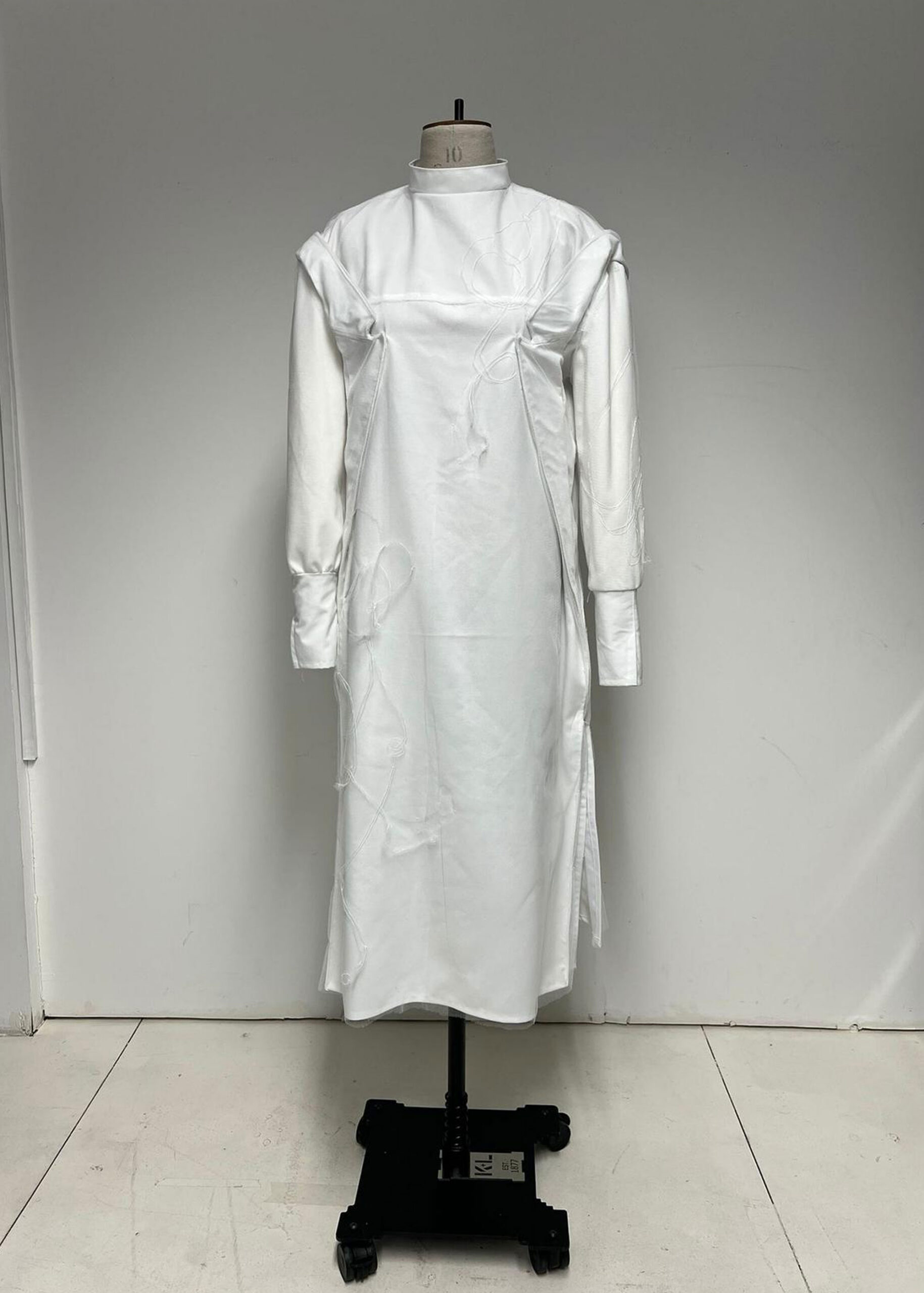
In response to my conversation with Rebecca Wilkins, I wanted to create a garment reflective of the joy and gratitude that exist within the HIV/AIDS community and its caretakers. She mentioned how so much of her care was centred around celebrating life, rather than diminishing it. Her care extended beyond the boundaries of what you would expect from a typical healthcare practitioner; she threw parties and planned holidays for her patients. She was able to become whoever the patients needed her to be, whether that be a nurse, social worker, or friend. As such, I wanted to create a uniform reflective of that idea by subverting and disassembling a traditional lab coat.

The cutting of the coat is inspired by the “Howie lab coat”, initially designed by a woman in 1974, Dr Betty Dowsett. It was created as a very innovative form of laboratory dress. However, she asked her male colleague, James Heggie, to co-publish the design for fear that it would not be taken seriously within the industry and medical journals at the time if made by a woman. The Howie coat is a testament to the value and tenacity of women in healthcare and medicine. I was adamant to reference the Howie coat as a way to reflect Wilkins’ venerable experience working as a nurse.

Tran Hoang + Dr Tristan Barber

Tran Hoang

Trang Hoang is a Vietnamese-born womenswear designer currently in her second year at the University of Westminster in London. Drawn to London by the city’s energy as a global fashion capital, her journey from Vietnam was not simply geographical — it was a creative awakening that deepened her relationship with her own cultural identity while expanding her visual vocabulary in entirely new directions. At the heart of Trang’s practice is a belief that fashion is a physical manifestation of the internal dialogue between oneself and the world. For her, design is a way of understanding her own culture and navigating the tension of the dichotomy between East and West — a threshold she returns to again and again, not seeking resolution, but embracing the space between as fertile creative ground. Her design language is rooted in Vietnam’s natural environment and its rich cultural and architectural heritage — the faded elegance of Hanoi’s old quarters, the layered textures of rural landscapes, and the precise geometry found in traditional craft and ornamentation. These are not surface-level references but deeply personal ones, translated into considered colour palettes that carry both emotional weight and cultural memory. Print development occupies a central place in Trang’s work — a method of encoding place, history, and identity directly into cloth. She is drawn to the notion that a garment can function as a vessel for untold stories, where surface and structure speak to something felt rather than simply seen.

Dr Tristan Barber

Dr Tristan Barber (he/them) is a Consultant Physician in HIV Medicine at the Ian Charleson Day Centre, Royal Free Hospital, Honorary Associate Professor at the Institute for Global Health, University College London, and Chair of the British HIV Association (BHIVA). Tristan is Immediate Past Chair of the peer support charity Positively UK and has been living with HIV since 2002. He is current Editor-in-Chief of the journal HIV Research and Clinical Practice. Tristan established a dedicated frailty service for ageing patients with HIV infection in 2019 (The Sage Clinic) and has a research background in HIV-related neurocognitive impairment and antiretroviral clinical trials. He is passionate about global health and ending HIV-related stigma.

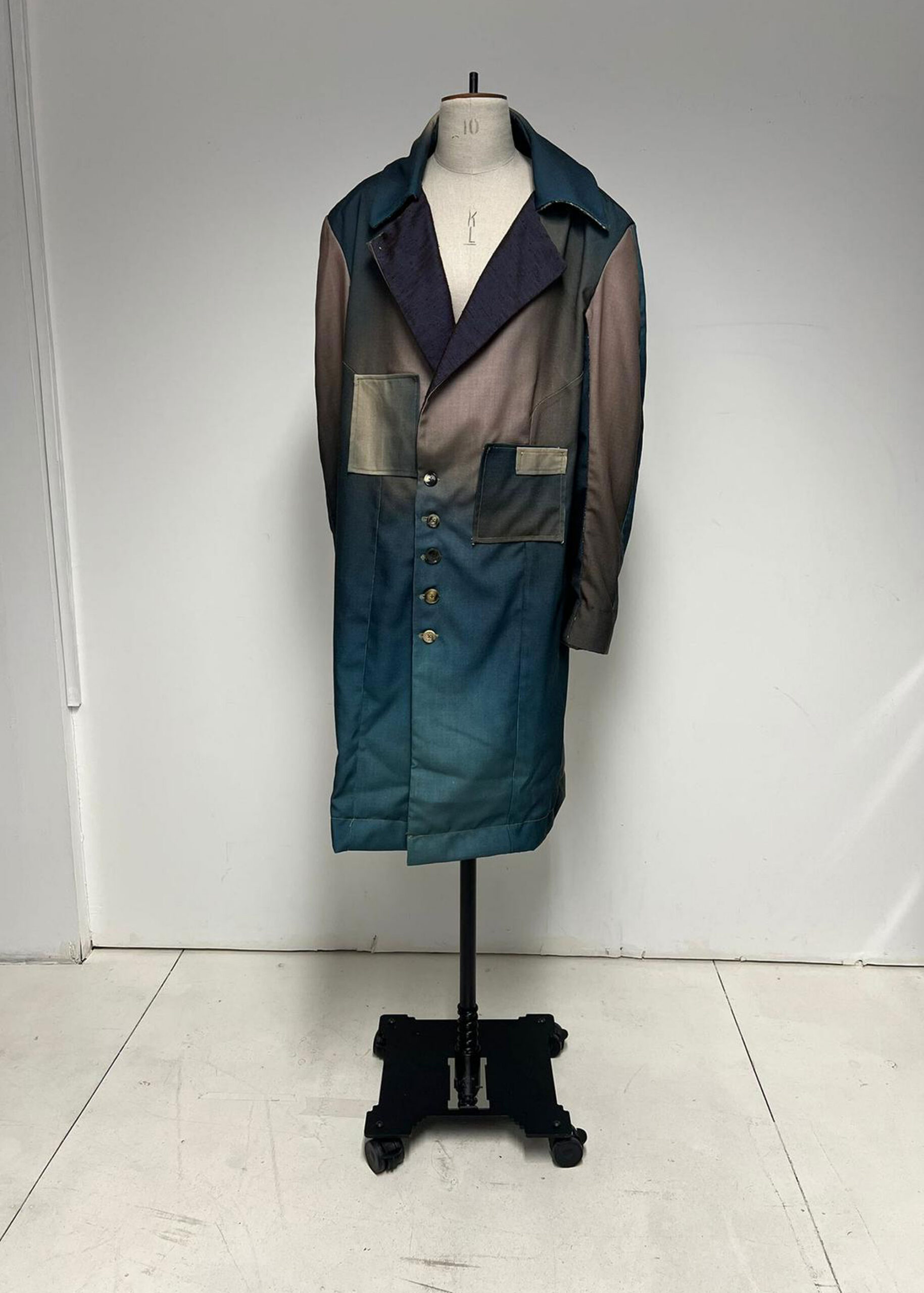
The lab coat is constructed from a custom sublimation-printed woven fabric, its surface carrying an original print developed in response to conversations with Dr Tristan Barber and his research into HIV-related neurocognitive impairment. The silhouette is deliberately classic yet quietly subversive — a notched lapel collar, an asymmetric five-button closure, and asymmetrically placed patch pockets that disrupt expectation without abandoning function.

At the centre back, an inlaid pleated organza panel, sublimation-printed, forms the garment’s emotional core. The pleats are not merely structural; they are symbolic, representing the bridging of gaps between older HIV patients and a healthcare system that too often fails to see them. They speak to the complexity of lives lived fully and quietly with the condition for decades — stories less visible in mainstream narratives, yet no less profound. Hand-stitched details on the organza signify finding beauty in the irregular, the humane.

The print itself moves between restraint and warmth, honouring the weight of difficult histories while reaching towards resilience. Every design decision, from the layering of organza over woven cloth to the careful placement of each element, is an act of acknowledgement. This coat is a tribute to the journey from surviving to thriving, and to the people whose stories deserve to be worn, seen, and celebrated.